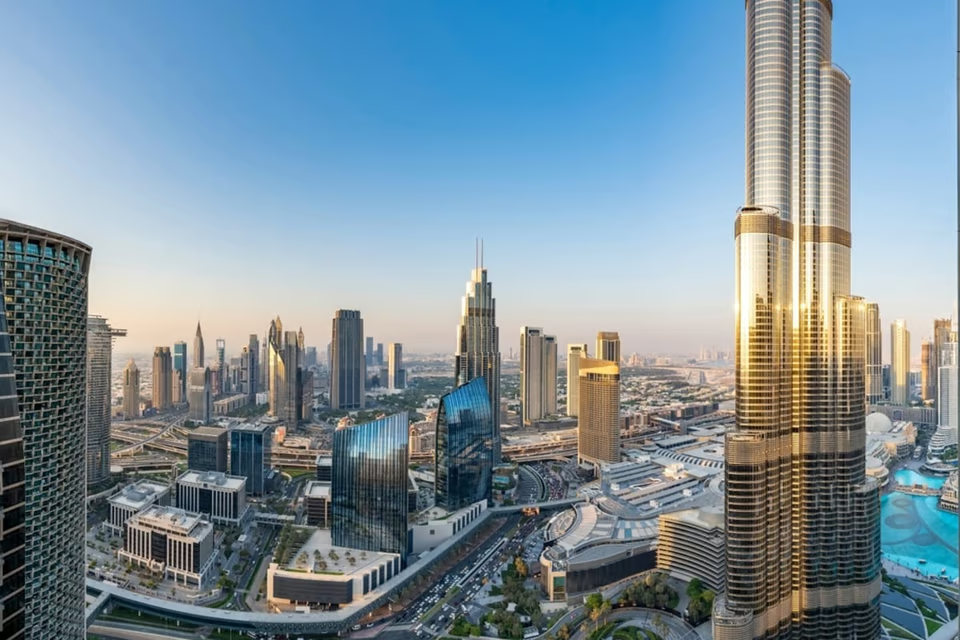

The expansion of Dubai city is beneficial for property owners, and improved “connectivity” plays a crucial role in enhancing their advantages.
Al Khail Road, once considered a slightly more circuitous option to Sheikh Zayed Road, has evolved into a crucial thoroughfare linking many of the city’s burgeoning residential communities, making it one of the busiest highways in the city.
Throughout the week, I often find myself on this road for longer durations than I would prefer. However, this situation is poised to improve significantly with the promising announcement of road enhancements that are expected to reduce travel time by nearly a third.
The forthcoming improvement is undoubtedly a cause for relief for many commuters, but its positive impact extends beyond them – it also bodes well for the real estate sector.
Migrating centre of Dubai
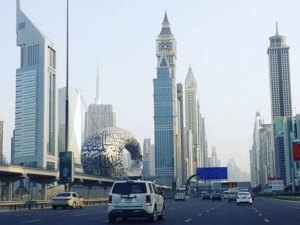
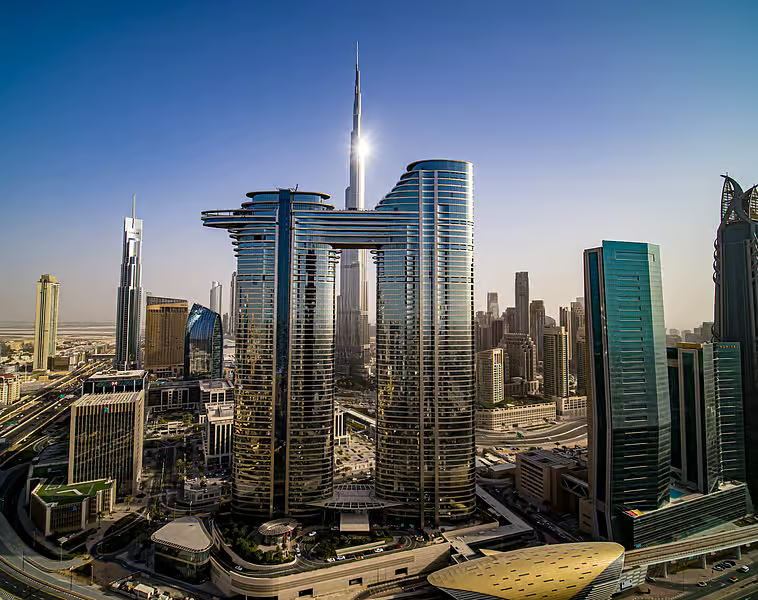
Dubai has always pursued an urban-centric vision, initiating its first significant phase of growth along Sheikh Zayed Road. This led to the development of areas like DIFC and Downtown, which were seamlessly connected to subsequent expansions in Dubai Marina and JLT. Downtown Dubai was strategically positioned as the city’s focal point, with road networks designed for convenient passage through it.
A decade ago, when I first arrived, there were only a few residential neighborhoods, with Arabian Ranches being the most notable. These were considered distant suburbs of Dubai, existing on the outskirts of the city proper.
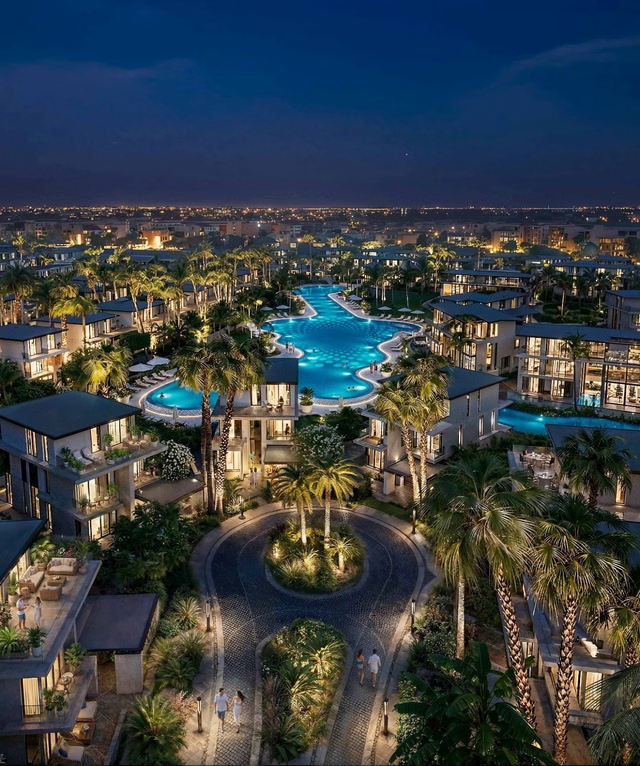
During that period, Al Khail Road was relatively new and offered limited access between areas like Ranches and the city’s urban centers. Over the decade, we witnessed the emergence of Arabian Ranches 2 (with Ranches 3 initiating its first phase of handovers), Jumeirah Golf Estates, Mudon, Damac Hills, Dubai Hills Estate, and Tilal Al Ghaf.
It’s accurate to say that these locations are no longer considered ‘suburbs’ of the city. The center has now shifted, with more and more families settling in Dubai and establishing their lives here. However, the road networks need some improvement to keep up with this transformation.
Making the city ‘smaller’
Location unquestionably plays a crucial role in any real estate choice. The commute duration to work and school stands out as particularly impactful, given that it can consume a substantial portion of one’s morning or afternoon, contingent on traffic conditions. Living in proximity to one’s workplace is a universal preference, leading to a shift in the market’s supply and demand dynamics.
In the initial years post the onset of Covid, commuting was not a significant concern. Many businesses endorsed work-from-home arrangements or adopted hybrid models, with the primary focus of home seekers being on spacious and private living spaces.
As there is now a substantial push for employees to return to the office, the dynamics have shifted, making it crucial to find a residence that facilitates convenient travel to and from work.
Dubai Hills Estate has experienced a considerable increase in value, partially attributed to its location, being less than 15 minutes away from Downtown and enjoying relatively short commute times, even during peak hours. This is why individuals might choose to reside in Sidra or Maple over areas farther out, where the commute could be up to 20 minutes longer.
Improving the road infrastructure will significantly reduce drive times, effectively bringing those outlying areas closer to the city. In approximately 5 years, it might be possible to drive from Downtown to Damac Hills 2 in under half an hour.
Boosting newer communities
As Dubai’s road networks progress, the expanded search radius for potential homebuyers and tenants becomes a natural consequence. This development particularly enhances the appeal of recently established communities like Arabian Ranches 3 and Tilal Al Ghaf, making them more enticing for new residents. The improved connectivity will further align these areas with the preferences of numerous families.
However, it is unlikely that we will witness a decline in prices in Dubai Hills as individuals explore options farther away.
Although property values cannot rise indefinitely, Dubai Hills has established a distinctive niche, and those willing to pay premium prices are likely to persist in doing so. This suggests that property values may increase in communities currently considered more affordable as demand in those areas intensifies.
It will be intriguing to observe the city’s ongoing growth and its adjustments to accommodate that expansion. These modifications will also result in a shorter commute for me, which is simply a pleasant bonus.