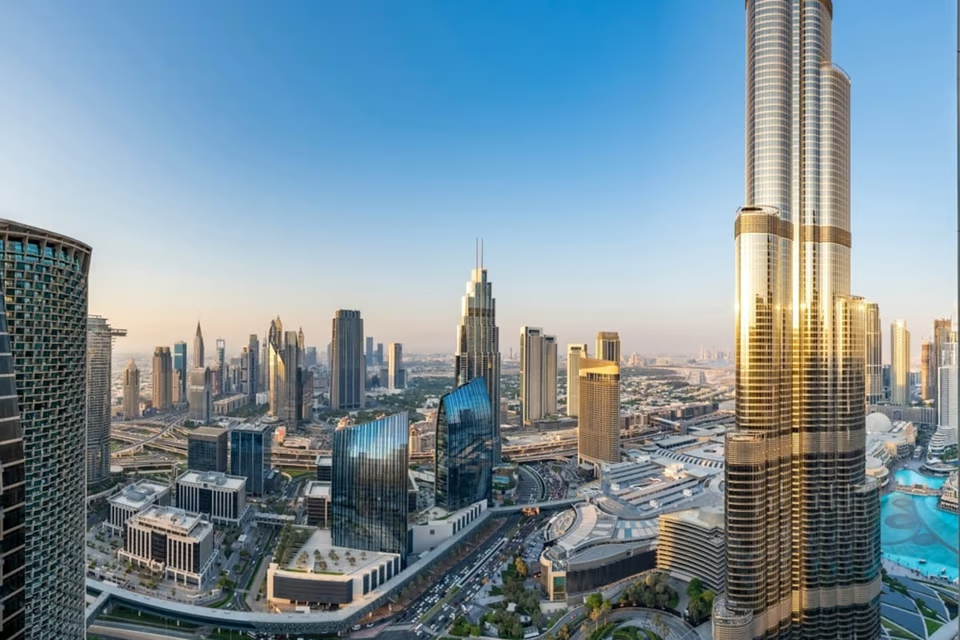
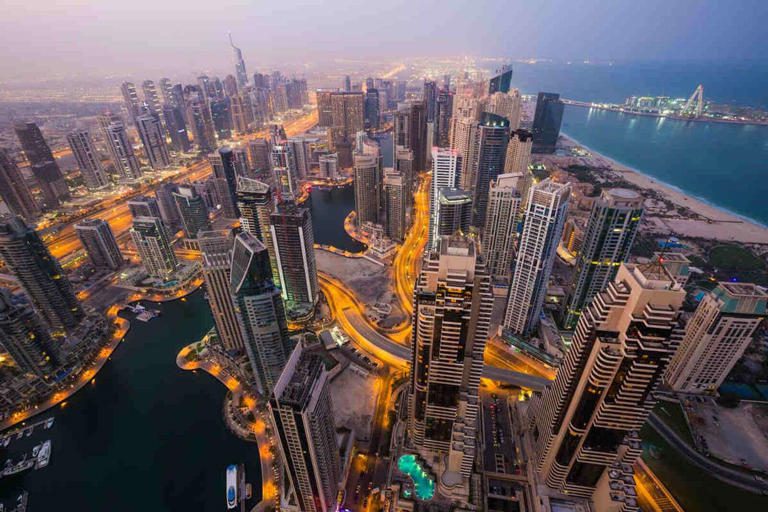
New Dubai residents are quickly transitioning from renting to owning properties to avoid rising rents in the emirate. This shift is driven by their plans to stay longer, which helps absorb the incoming market supply.
Dubai’s population growth continues to drive rental transactions, especially in new developments, where a substantial portion of newly completed projects is taken up by the rental market.
Rents in Dubai surged up to 31 percent during the first half of 2024 due to consistently strong demand, leading to a shortage of supply in both affordable and luxury segments.
Industry insiders report that rentals are rising faster in the outskirts as residents and new arrivals migrate to these developing areas due to the still relatively lower rents.
“There is a notable trend where new residents rent for their first one or two years. Then, they become the next wave of buyers looking to settle here for the long term due to business and lifestyle reasons,” said John Lyons, managing director of Espace Real Estate.
“New residents and the rental market in general help absorb a large number of newly completed properties. In Downtown Dubai, for example, three new buildings were completed in 2023, and over 550 new rental contracts were registered in these buildings alone in the first half of 2024. It is very encouraging to see the market absorb this new supply so quickly,” he added.
According to Espace, average rents are rising in nearly all communities, though transaction volumes are falling in most areas. “High rental prices, an affordable mortgage market, relaxed visa regulations, and ongoing population growth are driving Dubai’s secular trend, with many tenants choosing homeownership as they establish their long-term roots in Dubai,” they stated.
“Although there will be a surge in rental supply in 2025 and 2026, 80 percent of this will be apartments. These typically house smaller households, leading to an overestimation of the population growth needed to absorb the supply,” Lyons noted.
“We are seeing very strong transaction data across the Emirate, indicating that Dubai is continuously developing, community by community. Dubai’s super cycle of value and transaction volume growth is expected to persist for many years,” he added.
“Amidst the global economic slowdown and rising interest rates, we have noticed a trend of investors worldwide turning to wealth-preserving assets. Dubai’s real estate sector has become a standout choice in today’s economic climate, with prices and consumer interest continuing to rise even after 24 months of continuous growth,” said Haider Ali Khan, CEO of Bayut and head of Dubizzle Group MENA.
With over 50,000 new residents moving to Dubai in the first half of 2024, Allsopp & Allsopp reported that demand for new properties continues to outweigh the current supply in the residential market, indicating that the market will remain on its upward trajectory heading into the second half of 2024.
According to Bayut, rents in Dubai increased between 4 percent and 31 percent in the first half of 2024. Mid-tier apartments saw a rental increase of up to 15 percent, while luxury apartment rentals rose by up to 7 percent. However, some units in Business Bay and Downtown Dubai saw price decreases of under 6 percent.
Budget villa rentals increased by 12 percent, mid-tier villa rentals by up to 15 percent, and luxury villa rentals surged by up to 27 percent, with Damac Hills recording the highest increase for its limited inventory of 6-bed units.
For those seeking affordable accommodation, Deira and Al Nahda have become popular choices for apartments, while Damac Hills 2 and Mirdif have attracted interest for villas. In the mid-tier segment, Jumeirah Village Circle (JVC) and Bur Dubai apartments remain in high demand among tenants, whereas properties in Town Square and JVC appeal to those seeking villas. In the luxury category, Dubai Marina and Business Bay maintain their popularity for apartment rentals, while Dubai Hills Estate and Al Barsha are desired destinations for high-end villa rentals.
Dubai’s property market rally continued in the first half of 2024, with prices rising in most areas, defying speculations of a market slowdown.
Industry executives suggest strong demand across affordable, high-end, and mid-end categories, with villa prices increasing over 41 percent due to heightened local and foreign demand for affordable homes in the emirate.
Allsopp & Allsopp’s latest H1 report indicates that data from the Dubai Land Department showed total sales value in the first half reached Dh190.4 billion, a significant 38 percent increase compared to the same period in 2023.
Despite the three-and-a-half-year rally, prices remain highly affordable compared to other luxury real estate destinations worldwide, making it an attractive option for new and institutional investors.
Real estate platform Bayut noted a noticeable increase in average sales transaction prices for apartments, varying from 12 percent to 40 percent in the mid-tier property segment, with the most significant growth observed in Jumeirah Lake Towers (JLT). Similarly, sought-after areas featuring mid-tier villas have seen increases in average transaction sales prices ranging from 4 percent to 23 percent. Most areas in the luxury property segment also recorded consistent increases in transactional prices, ranging from 5 percent to 24 percent.
In addition to affordable prices, investors are also drawn to the high rental yields in the Dubai property market.
During the first half of 2024, Dubai Investments Park (DIP), Discovery Gardens, and Remraam offered rental yields of up to 11 percent. For mid-tier apartments, Dubai Sports City, Dubai Silicon Oasis, and Motor City are particularly attractive, with rental yields surpassing 9 percent. Additionally, luxury apartment locations such as Green Community, Al Sufouh, and Damac Hills have shown returns of up to 9 percent, outpacing many global markets.