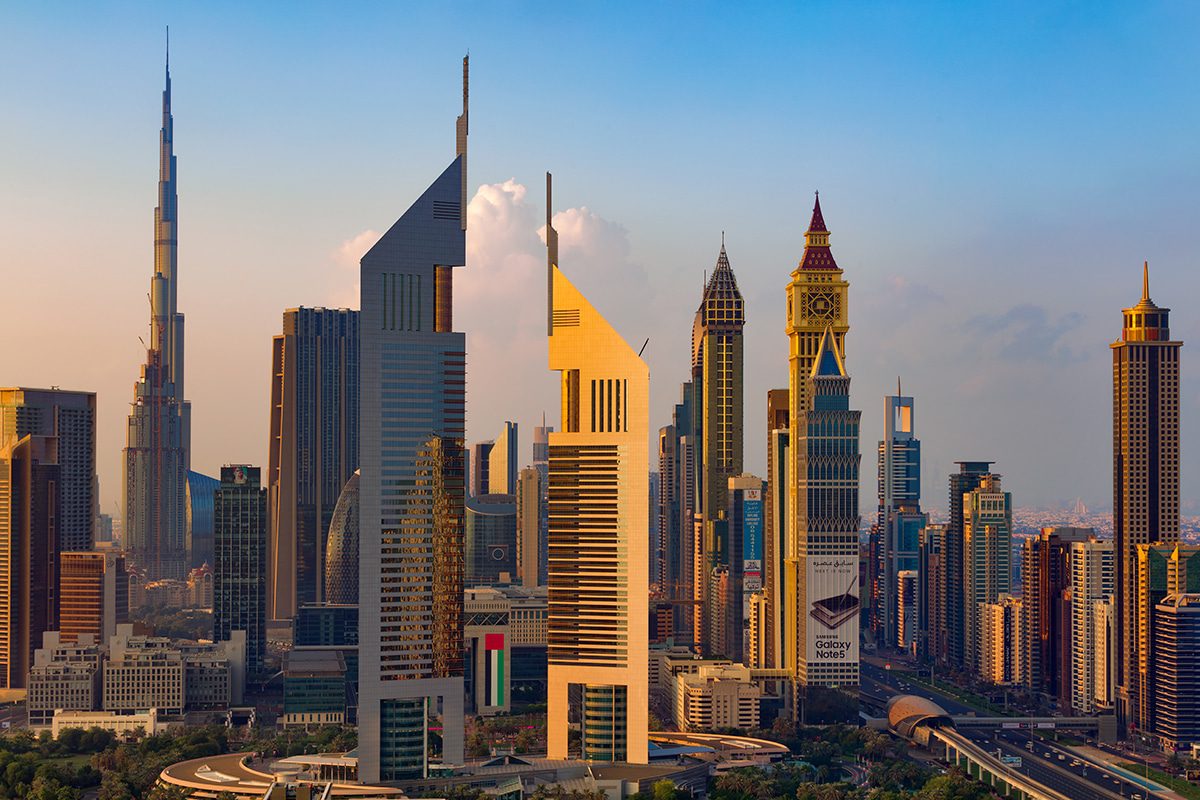
The UAE’s office sector experienced strong performance in the second quarter of 2024, as noted in JLL’s UAE Real Estate Market Overview report. This growth is attributed to a robust economy, diverse demand, and a focus by occupiers on quality and sustainable office spaces. The report also noted increases in available office space, rising rents, and declining vacancy rates in both Dubai and Abu Dhabi.
Dubai saw its office gross leasable area (GLA) increase by 20,000 sq. m., bringing the total to 9.26 million sq. m. Meanwhile, Abu Dhabi’s total stock remained at 3.95 million sq. m., with only 7,500 sq. m. added. However, an additional 125,000 sq. m. of office space is expected to be completed in the second half of the year.
Rents rose in both cities, with Dubai’s central business district (CBD) experiencing a 15 percent year-on-year increase to AED2,630 per sq. m. per annum. In Abu Dhabi, average Grade A rents climbed by 10 percent to AED2,085 per sq. m. per annum.
“In the first half of 2024, developers in the commercial real estate sector launched several new projects in both Dubai and Abu Dhabi. These efforts aim to alleviate long-term constraints and meet the growing demand from occupiers seeking high-quality, sustainable office spaces. With over 140,000 sq. m. of new space planned for delivery by the year’s end, we can expect to attract new companies as the UAE strengthens its position as a global business hub,” said Faraz Ahmed, Research Director at JLL MENA.
Dubai and Abu Dhabi real estate: Rising home prices
The residential sector in Dubai saw a strong performance, with a 28 percent increase in value and a 34 percent rise in the volume of residential sales transactions from H1 2023 to H1 2024.
Sale prices in Dubai rose by 20 percent year-on-year, while in Abu Dhabi, villas and apartments experienced increases of 8 percent and 6 percent, respectively.
The retail market experienced notable rent increases, with Dubai seeing a 16 percent year-on-year rise in average rental rates in primary and secondary malls, and Abu Dhabi reporting an 11 percent increase.
Despite the typically slower summer season, the hospitality sector showed strong growth in hotel performance figures for both Dubai and Abu Dhabi.
Dubai’s Average Daily Rates (ADR) increased by 5 percent year-on-year, while Abu Dhabi experienced a 13 percent rise.
In the industrial market, warehouse rents across all submarkets in Dubai grew by 14 percent year-on-year in Q2.
In the same period, Abu Dhabi’s average warehouse rents rose by 10 percent year-on-year.