
At ground level, new trends are shaping up that investors must take into account.
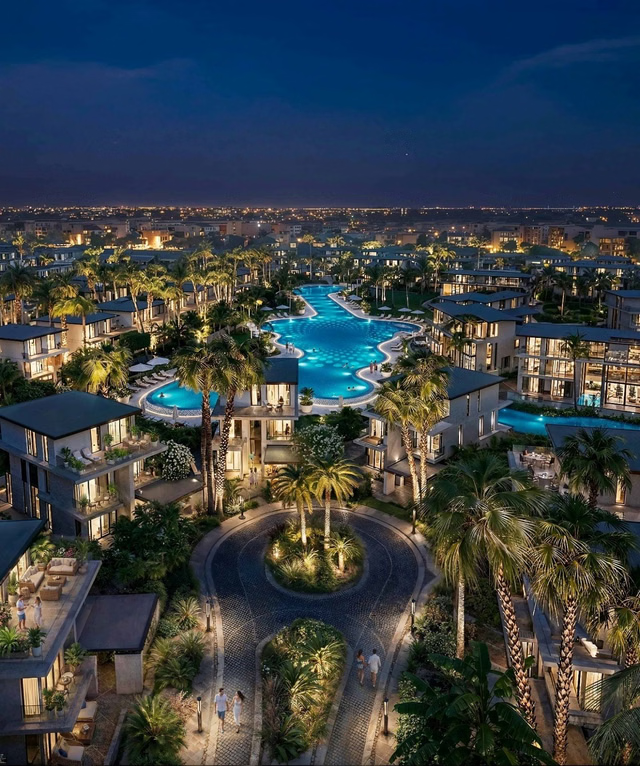
In Dubai’s property market, developers are rolling out new launches at an astonishing pace, averaging one every 15 hours. The question remains: can this momentum be maintained?
This year has been transformative for real estate, marked by the return of zero down payments on Dubai off-plan purchases and an influx of new launches, pushing the supply pipeline past 350,000 units—and still climbing.
The “no money down” option has encouraged many to take on risks akin to capital markets, as zero down payments make entry accessible to almost everyone. In 2024, the market has shown a clear preference for off-plan properties, which now make up over 77% of transactions, even as prices for ready properties begin to decline.
Developers have ended the year offering relentless incentives. The reasoning is that buying older properties is no longer attractive due to their outdated state and the significant costs of retrofitting them to modern standards.
This shift began in 2021 but has since slowed, focusing instead on the luxury market’s upper echelons.
However, while older properties are seen as a poor investment, similar concerns apply to new properties due to shrinking sizes. Since the advent of the freehold market in 2002, the median size of apartments and houses has decreased by over 25%.
Mortgage Affordability
Mortgage options remain out of reach for many due to affordability challenges. In response, developers have introduced flexible payment plans, allowing buyers to purchase properties at their own pace.
This fragmented approach reflects the ongoing struggle to attract buyers, with cancellations becoming a more frequent issue. Such cancellations lead to project delays, prompting a cycle of buying and selling that increasingly targets high-end users who can grab headlines.
Rents, on the other hand, are stabilizing and, in some instances, showing slight declines. However, the market slowdown is mostly reflected in a reduced rate of price increases, even as new launches continue at a rapid pace, with new developers entering the scene almost daily.
The recurring nature of this market activity feels like déjà vu, as periods of overpricing inevitably lead to subdued performance.
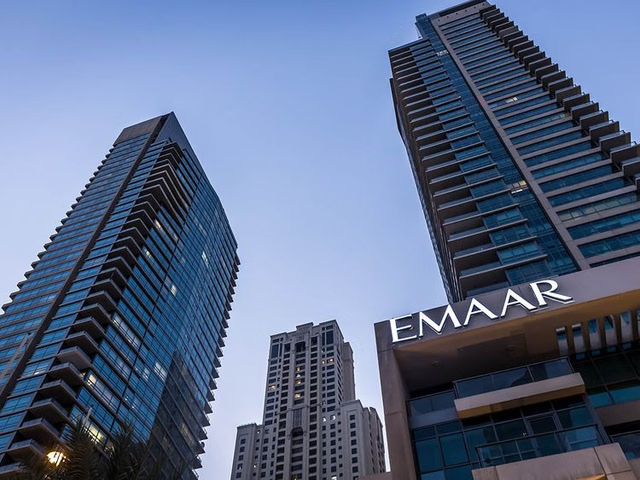
For those seeking capital gains, signals from the capital markets suggest a shift. Real estate stocks have outperformed physical assets, with Emaar’s decision to pay out share capital as dividends being met with enthusiasm. This move positions it as one of the year’s best-performing stocks.
Better Returns Than the S&P 500?
This strategy reflects a belief that shareholders are better off receiving cash rather than reinvesting, especially as rising land prices make new projects less viable.
Investors increasingly find value in real estate stock valuations and the broader capital markets. In fact, equal investments in UAE IPOs over the past three years have yielded higher returns than the S&P 500.
This shift underscores a growing focus on cash flow over capital gains as the market adjusts to ongoing concerns about inflation and living costs.
Despite challenges, the market has remained bullish, both locally and internationally, from real estate to capital markets. The widening gap between ready and off-plan prices and valuations continues to be overlooked—until it isn’t.
Profitability has surged, and with an influx of capital and enterprise, the outlook remains optimistic for continued growth.
However, this optimism sometimes leads to reckless behavior, with price volatility and aggressive developer offers highlighting a frothy market. So far, average investors have demonstrated restraint, exercising patience in their decisions.
For now, that patience remains untested. Whether this trend will persist remains to be seen.