There has been notable activity at the top end of global housing markets.
While record-breaking property valuations often make headlines, similar enthusiasm is rarely seen when those same properties sell at significant discounts.
Take, for instance, a property on New York’s ‘Billionaire’s Row’ that sold for $48 million—well below its pre-Trump tariff-era asking price of $70 million. Although this may appear to be an isolated case, a closer look at the data reveals multiple such deals, suggesting that property prices have surged well beyond both inflation and construction cost increases.
Dubai Land Values
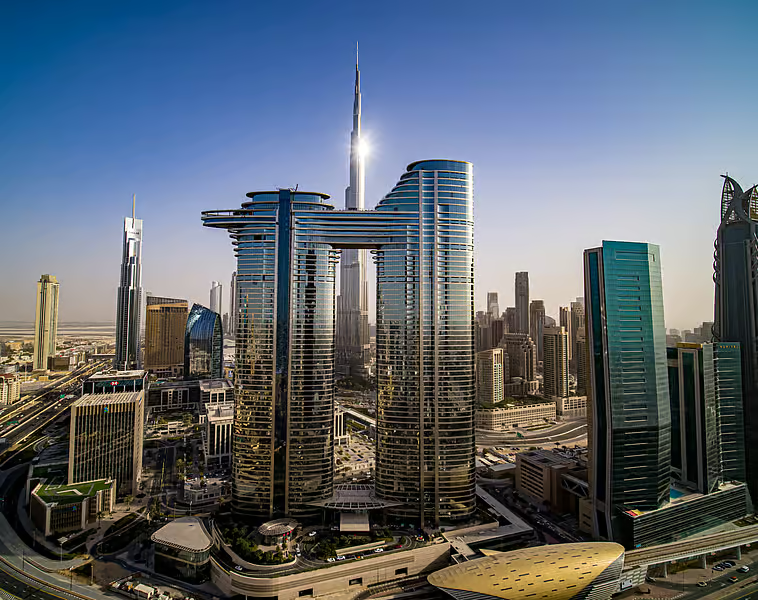
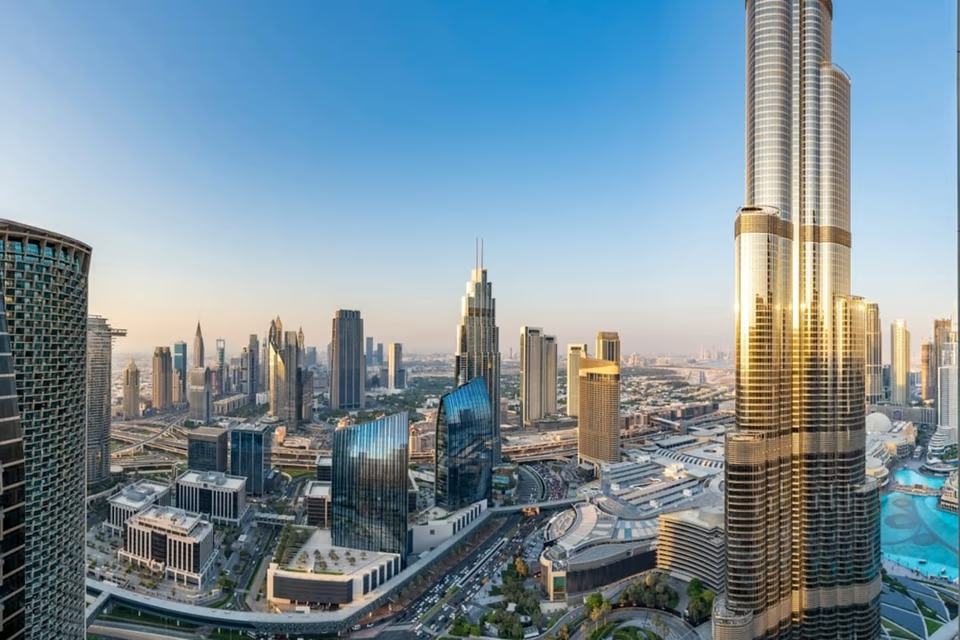
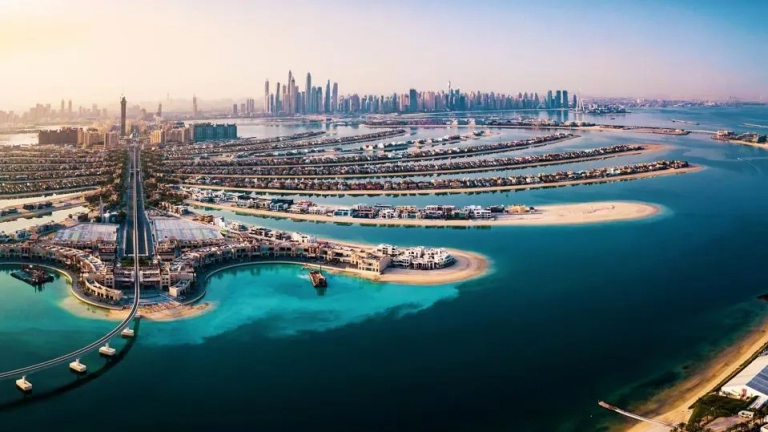
Land prices in these premium areas have certainly surged, though historically, land has been the most volatile component of luxury real estate. Recently, a softening has emerged in locations like Palm Jumeirah and Downtown Dubai, where increased supply is starting to put downward pressure on prices.
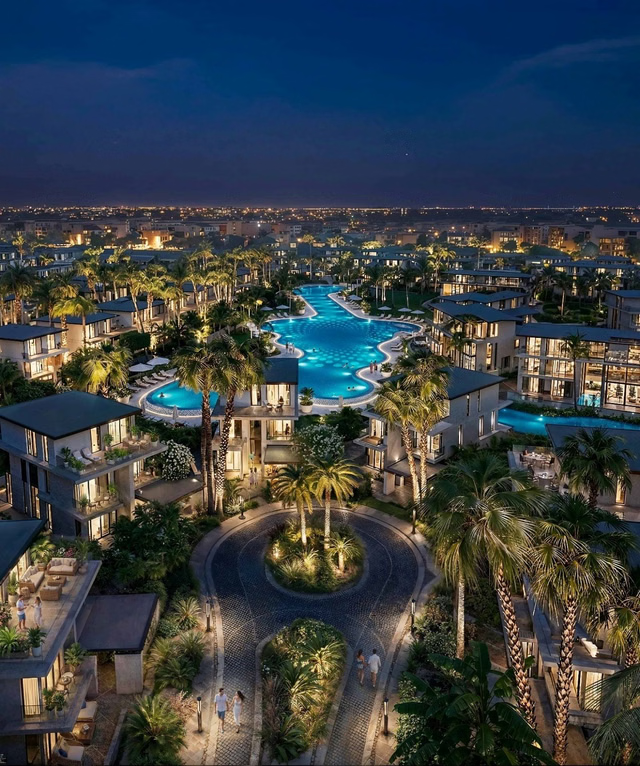
As new luxury developments emerge, buyers now have more options. However, land values in these zones have escalated, especially with easier financing in the villa segment. This raises concerns that the once-rumored supply shortage has reversed into a new challenge—one that relies on a demand curve presumed to rise steadily as Dubai transitions to a higher base price point.
In response, developers are turning to private credit, producing a paradox where higher borrowing costs are matched by higher selling prices—even though mortgage rates have not risen proportionately.
Declining Return on Equity
While developers remain focused on building, the return on equity for new projects has fallen—sometimes even turning negative.
This trend suggests capital is increasingly locked into real estate ventures, which contradicts the principle that investments should flow toward areas requiring less capital with higher returns.
For comparison, companies like Salik, Parkin, and Dubai Taxi operate on leaner capital models with better returns—an important consideration in an era of rising inflation.
Despite this, much of the narrative still leans heavily toward luxury real estate being the ideal investment. However, the idea of ‘replacement value’ holds little weight in a market segment often influenced more by geopolitical than economic forces.
That said, land pricing trends, oversupply, and added incentives in Dubai’s luxury sector point to a tightening market. Claims such as “there are hardly any homes left along the shoreline” imply that erratic pricing may lie ahead. Yet, these statements overlook the fact that top-tier communities like Emirates Hills and Dubai Hills are located inland.
Markets ultimately mirror what consumers value, and people will pay to live where they choose. However, as history shows, sentiment can shift quickly. When that happens, land values have the power to pull prices up—or push them down.
With current price levels already built on lofty expectations of a luxury-driven population boom, a shift toward a more cautious buyer sentiment seems likely. Some have even commented that, at these prices, they’d prefer a view of bathtubs over oceanfronts—hinting that the era of runaway prices may soon give way to a more measured market correction.