According to the latest global rankings by the Council on Tall Buildings and Urban Habitat (CTBUH), the UAE has overtaken the United States to claim the second spot globally for the number of supertall skyscrapers—defined as buildings rising over 300 meters.
This achievement not only cements the UAE’s place on the global architectural stage but also reflects its broader vision of urban ambition, national pride, and a bold reimagining of its skyline.
The country now boasts more than 30 completed supertall structures, most of which have been built in the past decade. From the iconic Burj Khalifa in Dubai to the sophisticated Adnoc Headquarters in Abu Dhabi, the UAE’s vertical expansion is a powerful declaration of intent—not just a height race.
CTBUH also highlights the UAE’s leadership in combining advanced engineering with futuristic aesthetics to produce tall buildings that are not only impressive but also sustainable, intelligent, and resilient.
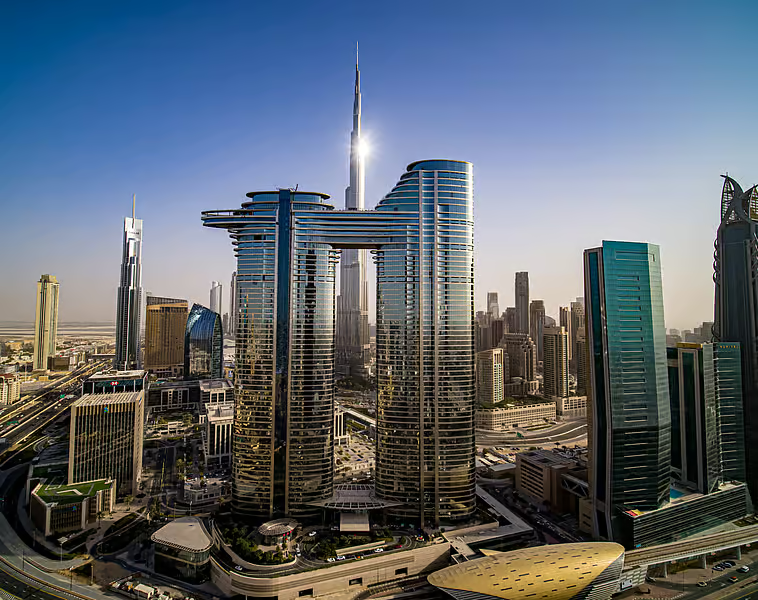
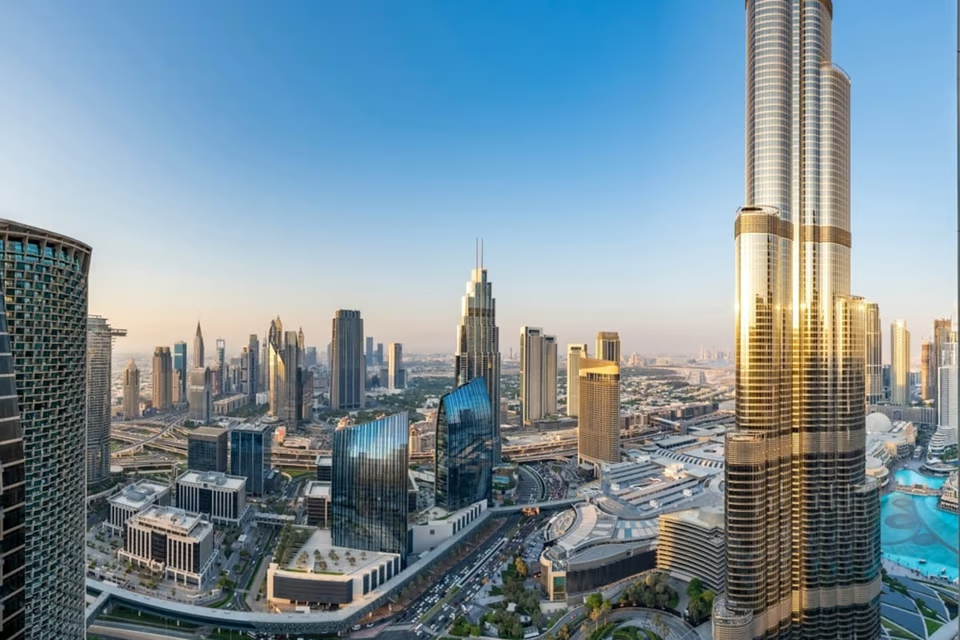
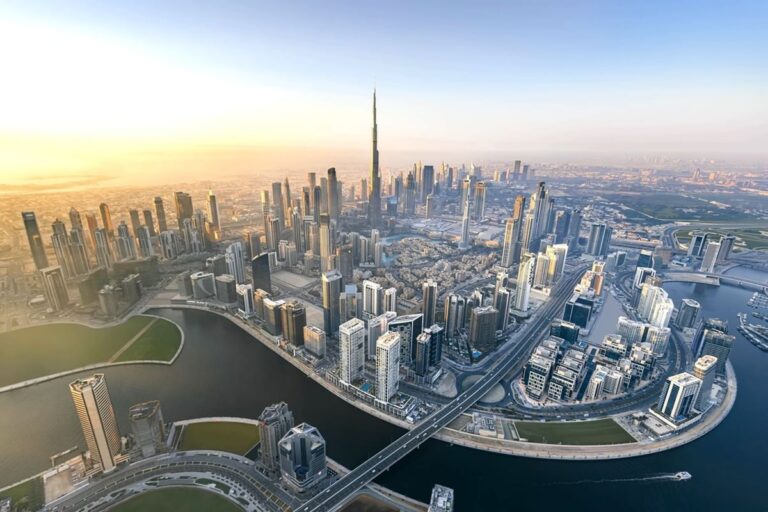
At the forefront of this architectural movement is Dubai, which now ranks fourth globally among cities with the highest number of completed buildings taller than 150 meters. The city is home to over 250 such towers, showcasing a remarkable mix of ambition and elegance. Dominated by the towering 828-meter Burj Khalifa, Dubai’s skyline illustrates its dynamic real estate sector, tourism magnetism, and diversified economy.
Dubai’s growth has been both rapid and transformative. Once a modest Gulf town, it has evolved into a glamorous metropolis comparable to global powerhouses like New York, Shenzhen, and Hong Kong. A major driver behind this rise has been the city’s commitment to reducing dependence on oil and establishing itself as a hub for international business, innovation, and luxury living. In this context, skyscrapers represent more than just height—they symbolize ambition, global relevance, and national identity.
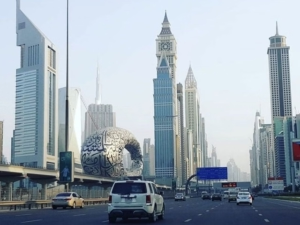
Many of Dubai’s most iconic buildings line Sheikh Zayed Road, the Marina, and Downtown Dubai. Each new addition challenges the norms of design and functionality. The city’s skyline, a towering mosaic of architecture, reflects a convergence of cultures, technologies, and economic aspirations—spanning everything from residential towers to multifunctional architectural feats.
The UAE has now firmly established itself as the second-most prolific builder of supertall skyscrapers worldwide. Its fast-paced growth and embrace of cutting-edge design are reshaping the narrative previously dominated by the U.S., once seen as the birthplace of skyscrapers. This shift is part of a broader movement where Middle Eastern cities are taking center stage in shaping global urban landscapes and livability standards.
CTBUH data confirms that the UAE has over 200 buildings taller than 150 meters, with more than 30 exceeding 300 meters. These structures serve as architectural icons and global landmarks, drawing worldwide attention and facilitating economic momentum. Renowned buildings like Marina 101, Emirates Towers, and Capital Gate are key contributors to this recognition.
Abu Dhabi and Sharjah are also playing crucial roles in this architectural rise. Abu Dhabi’s skyline has transformed with the addition of civic, commercial, and residential towers that emphasize sustainable and thoughtful design. Sharjah is now developing a new wave of high-rises that merge affordability with modern urban comforts.
Experts believe that the UAE’s skyline is more than a display of engineering excellence—it’s a cultural statement that reflects the country’s openness to global talent, investment, and innovation. These landmarks, drawing tourists, entrepreneurs, and visionaries from across the globe, represent the UAE’s remarkable journey from desert settlements to world-class cities.