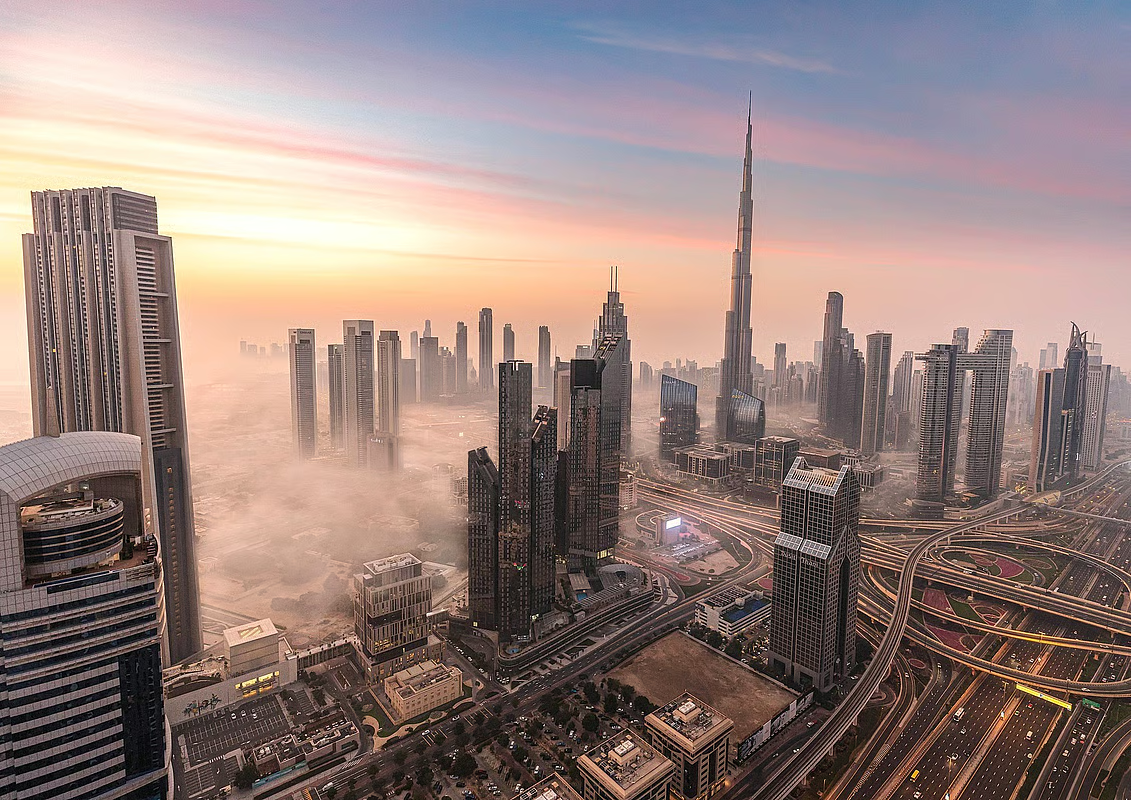
Dubai, once known primarily for its iconic architecture and tax benefits, has grown beyond being just a playground for the wealthy. It is now firmly establishing itself as a permanent lifestyle hub for global citizens. In recent years, there has been a notable increase in high-net-worth individuals purchasing prime properties not merely for investment diversification but for actual personal use.
In the past, Dubai’s property market was largely driven by flippers and short-term investors attracted by high rental returns, off-plan gains, and rapid development cycles. However, the buyer profile has changed significantly, especially in the five years after the pandemic. Today’s purchasers are more emotionally connected, seeking long-term security, lifestyle advantages, and genuine homes for themselves and their families.
This shift is further encouraged by initiatives like the Golden Visa program, improved residency laws, and Dubai’s unmatched lifestyle appeal, making it easier and more desirable for foreigners to settle. Consequently, demand in the real estate sector has transitioned from speculative buying toward end-user purchases, bringing more stability and sustainability to the market.
Why Second-Home Buyers are Drawn to the UAE
“The lifestyle benefits attracting second-home buyers to Dubai include a strong sense of safety, world-class infrastructure, strategic location, and significant tax advantages such as zero income tax,” explains Svetlana Vasilieva, Head of Secondary Sales at Metropolitan Premium Properties.
Families, in particular, are increasingly choosing Dubai as a second home. Attracted by its secure environment, excellent schools, and numerous family-friendly facilities, many are opting for larger homes to meet their growing needs.
“The introduction of programs like the Golden Visa and streamlined family sponsorship processes has made Dubai an even more appealing choice for families,” adds Vasilieva. “We’re seeing rising demand for 4- to 5-bedroom homes designed for comfortable, long-term living.”
Supporting this trend, Sara Aji, Managing Partner of Alma Developments, says, “Dubai’s appeal has expanded beyond traditional investors. Families now focus on livability rather than speculation. At Alma Gardens, demand is growing for thoughtfully designed homes featuring built-in studies, ample storage, and community amenities suited for multi-generational living and hybrid work lifestyles.”
Dubai’s reputation as a retirement-friendly city is also on the rise, thanks to the retirement visa program and the city’s tax-free status. “More retirees are considering Dubai for second homes,” Vasilieva observes. “The blend of a modern, well-connected city and tax benefits makes it an ideal choice for comfortable retirement abroad.”
Simultaneously, Dubai is becoming a magnet for digital nomads and remote professionals. Its remote work visa, fast internet, abundant coworking spaces, and thriving expat communities create an ideal environment for location-independent lifestyles.
Kareem Fahmy, Founder and CEO of Innovate Living and Co-Founder of Omoria, comments, “We see growing interest from professional couples, entrepreneurs, and remote workers relocating from major cities worldwide. They seek not only tax and climate benefits but also a high quality of life. Dubai offers a secure, vibrant, and culturally rich setting that meets diverse lifestyle needs.”
“The shift we observe is from pure investment to lifestyle-driven purchases,” says Aamil Tabani, CEO of Golden Bridge Real Estate. “Today’s buyers want more than just a property; they want a city that supports their way of life.”
Dubai’s unique combination of modern luxury, year-round sunshine, and top-tier infrastructure makes it an attractive option for second-home ownership. “From family-friendly healthcare and international schools to leisure amenities like golf courses, beaches, fine dining, and entertainment hubs, Dubai offers a lifestyle where families and individuals can live comfortably for extended periods,” Tabani explains. “This lifestyle appeal is the real draw for second-home buyers.”
Tax-Free Living and Long-Term Visas
Thanks to bold visa reforms, investor-friendly policies, and an enviable tax structure, Dubai is outpacing traditional second-home markets such as London, Paris, and Singapore.
“Dubai offers substantial tax benefits compared to traditional second-home destinations — especially for high-net-worth individuals, investors, and expatriates,” says Vasilieva.
“One of the biggest advantages is zero annual property tax, no capital gains tax, no inheritance tax, and no personal income tax.”
By contrast, Europe’s major cities impose annual property taxes ranging from 1% to 3%, with rental incomes taxed up to 45%, depending on residency and income brackets. In Singapore, foreign buyers face stamp duties as high as 60% and rental income taxes capped at 22%.
Dubai, however, provides clarity and predictability. “Owning a second home in London, Paris, or Singapore often involves a tangle of stamp duties, inheritance taxes, and high recurring fees,” says Aji. “Dubai is not only a fantastic lifestyle choice but also a more cost-efficient real estate investment.”
Beyond favorable taxes, Dubai is redefining property-linked residency with long-term visas.
“The introduction of 10-year Golden Visas has been transformative,” says Tabani. “It offers security, confidence, and mobility.”
Investors can now obtain a 10-year Golden Visa with a Dh2 million real estate investment — including mortgage-backed purchases. The recent removal of minimum down payment requirements has broadened investor access.
“Policy innovation has been a key driver,” Tabani adds. “Combined with transparent regulations and streamlined property registration, it has boosted Dubai’s appeal as a long-term second-home destination.”
Recent initiatives like the “visa on hold” system, which lets residents temporarily suspend their visa while transferring it to a new property, simplify relocation or upgrading without bureaucratic hurdles. Meanwhile, developers are enhancing offers with escrow-protected payment plans and post-handover options, making market entry easier than ever. “These shifts mark a move from transactional investment toward deeper lifestyle integration,” notes Aji.
“Dubai’s tax environment remains one of its strongest selling points,” says Fahmy. “Equally important is the government’s proactive regulatory approach. The UAE offers a unique blend of fiscal advantage, transparency, and lifestyle.”
He points out that the recently introduced 9% corporate tax applies only to business profits exceeding Dh375,000 — leaving most residents and property investors unaffected.
“The government’s efforts ensure international investors feel supported,” Fahmy adds, “offering fast-track administrative services and stronger integration into the economy.”
Second Homes with First-Class Appeal
From panoramic waterfront villas to branded residences and smart serviced apartments, international buyers are embracing a new wave of convenience-focused luxury.
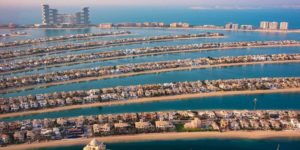
“Waterfront homes are top choices since beach access is limited in many countries,” says Vasilieva. “Branded residences appeal due to their high-end lifestyle amenities. Serviced apartments attract buyers wanting hassle-free investments offering short-stay flexibility and rental income, fully furnished with smart home features.”
Tabani highlights a surge in branded residences offering “hotel-like services and global prestige,” alongside waterfront and golf-course properties combining lifestyle appeal with solid rental returns. “Buyers seek convenience, premium amenities, strong resale potential, and minimal hassle. Developers are responding with turnkey solutions, flexible payment options, co-working lounges, wellness spaces, concierge services, and international school partnerships within communities.”
Fahmy believes hospitality sets Dubai apart. “Second-home buyers increasingly value residences offering more than design or location — they want ease, privacy, and intuitive service.”
Omoria embodies this with the Japanese philosophy of Omotenashi — thoughtful, anticipatory hospitality. “Technology and AI play a vital role,” Fahmy adds. “Our systems learn personal preferences, automate climate control, and prepare homes before arrival to enhance, not replace, human care.”
Aji agrees, noting that while branded residences and turnkey apartments remain popular, there’s growing demand for mid-size functional homes ready for immediate occupancy, especially from families and part-time residents. “At Alma, we offer fully fitted interiors, built-in storage, and flexible layouts for extended stays without the hassle of furnishing post-handover. Buyers want homes that feel lived in from day one.”
Top Picks for Savvy Buyers
According to Vasilieva, family-oriented gated communities lead the way. “From a real estate perspective, several Dubai neighborhoods are preferred by second-home buyers due to lifestyle, infrastructure, and investment appeal,” she says. “Gated communities like Dubai Hills Estate, Arabian Ranches, and Emirates Living are popular for their secure, family-friendly environments, green spaces, and well-developed social infrastructure.”
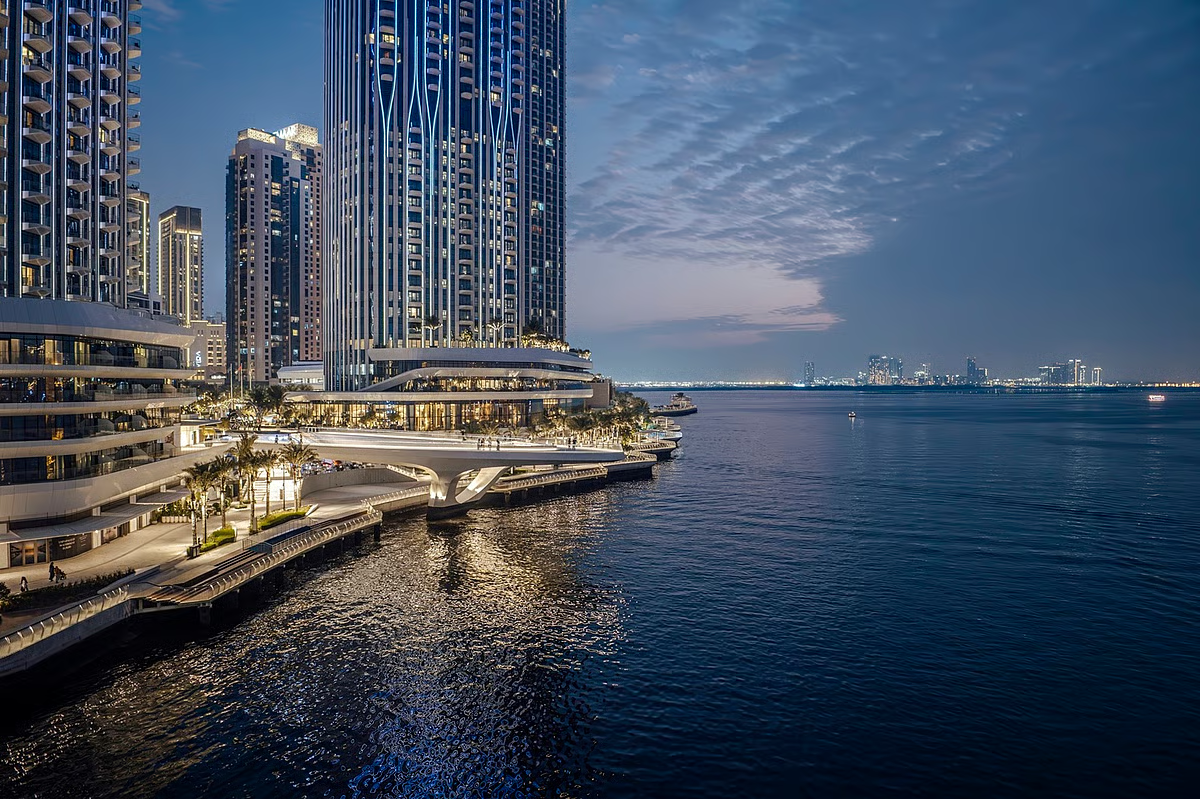
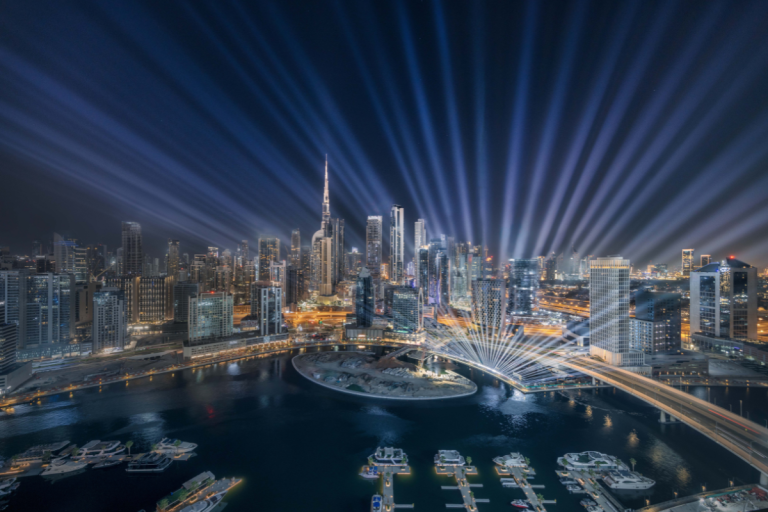
For those seeking an urban vibe, areas such as Dubai Marina, Downtown Dubai, and Dubai Creek Harbour remain in high demand. These neighborhoods offer waterfront living near business hubs, plus lively dining and entertainment options. “Mohammed Bin Rashid City (MBR City) is also gaining popularity for its central location, spacious layouts, and luxury amenities,” Vasilieva adds.
“While established areas like Palm Jumeirah, Downtown, and Dubai Marina maintain strong demand, we’re seeing growing interest in new masterplans like Dubai Islands,” Fahmy notes. “These emerging developments focus on integrated living — combining residential, lifestyle, cultural, and wellness experiences in one ecosystem.”
Aji points to rising momentum in Dubailand, especially in places like Liwan. “Though luxury hotspots like Downtown and Palm remain strong, emerging mid-market areas like Liwan are gaining traction,” she explains. “These communities offer more space, better value per square foot, and improved infrastructure, especially with the upcoming Dubai Metro Blue Line.”
‘Home Away From Home’
As global buyers seek flexible living that combines luxury, livability, and long-term potential, Dubai ticks all the boxes. The trend of using Dubai as a second home is growing — and here to stay.
Vasilieva believes Dubai is well-positioned to lead this global shift. “The concept of a second home has evolved post-pandemic. It’s no longer just a vacation spot but a flexible base supporting work, lifestyle, and security,” she says.
The pandemic changed perceptions of mobility and space. Today, a second home is not just a luxury retreat but a strategic base for remote work, family life, and wellbeing. Dubai’s unique mix of tax benefits, accessibility, and high-quality lifestyle solidifies its place among top global choices. “Dubai supports this evolution with flexible visas, zero income tax, top infrastructure, and political stability,” Vasilieva adds. “Its status as a global aviation hub further enhances its appeal.”
Aji agrees the shift is as much about mindset as market factors. “The pandemic redefined second homes — now flexible bases for work, family, and wellbeing.”
She also notes buyer diversification. While luxury remains strong, there’s rising mid-market interest from global citizens seeking value and livability.
“We expect the second-home trend to strengthen over the next decade,” Aji says. “Despite global economic challenges or localized oversupply, Dubai’s focus on livability and investor-friendly policies will keep it a leading global second-home market.”
Fahmy sees changing priorities too. “Buyers emphasize wellbeing, mobility, and quality of life over mere property ownership.”
“Dubai meets these priorities with world-class infrastructure, global connectivity, and a lifestyle blending culture and modern convenience.”
He adds Dubai’s appeal goes beyond safety and taxes: “It’s also about hospitality, experience, and design. Strategic initiatives like Dubai 2040 and consistent top safety rankings confirm Dubai as more than a destination — it’s a long-term lifestyle choice.”
Tabani attributes much growth to visa reforms, urban planning, and sustained tourism and sustainability investments.
“Post-pandemic, a second home is no longer just a luxury — it’s a flexible lifestyle solution,” he says. “People want a city offering opportunity, safety, and quality of life. Dubai ticks all the boxes, emerging as a hybrid home city for business, leisure, or seasonal living. It’s not just a second home anymore — for many, it’s their preferred ‘home away from home.’”