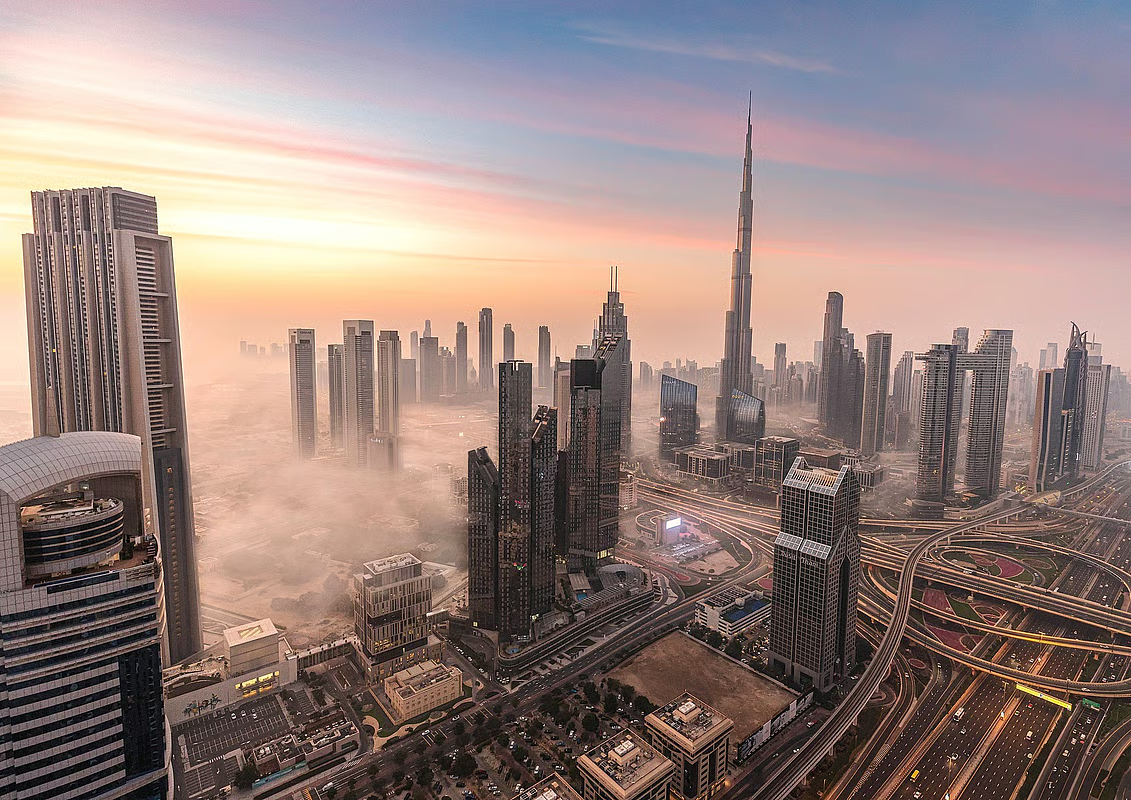
Dubai’s real estate sector has become an attractive alternative for international property investors, thanks to its stability and investor-friendly environment.
In recent times, Dubai has been drawing global investor interest, with an increase in investments from various buyer demographics. However, there has been a notable shift with European buyers, particularly from Germany, France, and the UK, becoming more active in the city’s property market.
“Historically dominated by regional buyers, the market has seen a rise in interest from European, Asian, African, and US investors,” said Elie Naaman, Co-Founder & CEO of Ellington Properties, in an exclusive interview with Arabian Business.
The surge in European buyers comes as global economic shifts, such as high inflation and economic uncertainties in other regions, make Dubai a more appealing destination.
“We are seeing increased activity from British, American, Spanish, and Indian nationals investing in Dubai,” noted Ainsley Duncombe, Managing Partner at Off-Market Listing.
Dubai’s stability and its investor-friendly policies, including long-term residency visas, the Golden Visa program, and 100% foreign business ownership, are key factors driving investor interest.
Naaman attributes this growing interest to Dubai’s solid infrastructure, world-class amenities, high rental yields, and tax-free environment, all of which form a compelling offer for European investors. Duncombe also mentions that fiscal challenges in European countries are contributing to renewed interest in Dubai’s real estate.
Earlier this week, Sobha Realty revealed that the top investor nationalities across its projects are India, China, Iran, and the UK.
Dubai’s proactive governance and strategic location have become increasingly valuable amid global uncertainties. “The current geopolitical situation has made real estate a secure investment, with investors seeking politically stable markets and transparent regulations, both of which Dubai offers,” said Naaman.
In addition to European buyers, Dubai is seeing greater activity from investors across South Asia, particularly from India, as well as from Russia and CIS regions.
Chinese investors are also returning, encouraged by Dubai’s strong ties with Asian markets.
Looking ahead, the market faces both opportunities and challenges. Naaman emphasizes the importance of balancing supply and demand while adapting to diverse investor needs. “As investor profiles diversify, marketing strategies and offerings must cater to varying cultural and financial preferences,” he said.
Despite potential challenges from rising global interest rates, Dubai’s competitive advantages, such as strong rental yields and tax-free status, continue to attract international investments.
The future of the market is expected to be shaped by sustainability and innovation, with developments increasingly incorporating smart technologies and sustainable features to meet the changing demands of investors.
“Dubai’s real estate market will continue evolving, with adaptability and innovation at its core. Sustainability, smart technology, and enhancing the investor experience will be essential for success,” Naaman explained.
Looking forward, the market anticipates a rise in interest from African countries, particularly Nigeria, Kenya, and South Africa, as well as a greater focus from US investors.
“We expect growing interest from Africa, fueled by increasing wealth and a desire for diversification. Moreover, with improving global travel, US investors are showing increased interest in Dubai’s real estate,” Naaman stated.
Additionally, strong investor interest from Eastern Europe and the region is expected to persist.
“Economic downturns, higher tax burdens, a rising cost of living, and reduced security in their home countries are pushing investors to seek not only new investment opportunities but also safe havens for their families and businesses,” Duncombe said.
He also suggested that American and Canadian investors may show growing interest in the market.
This surge in global interest is likely to benefit not only Dubai’s real estate market but also Ras Al Khaimah’s property sector, attracting international investors.
“Over 70% of transactions today are for off-plan properties, and RAK is proving to be highly popular as we approach 2027, when the Wynn Casino is set to open, transforming the hospitality and gaming landscape in the region,” Duncombe concluded.
In September, Arabian Business reported on Ras Al Khaimah’s real estate boom, spurred by several factors, including the upcoming Wynn Al Marjan Casino resort.
“The announcement of Wynn Al Marjan Resort has significantly boosted demand for real estate in RAK,” said Maxim Novikov, head of the RAK branch at Metropolitan Premium Properties.
He emphasized that “the time to act is now,” as the opening of the casino resort is expected to raise property prices by over 50%.
The Wynn Al Marjan Resort, set to open in 2027, is poised to greatly impact the local real estate market and economy.