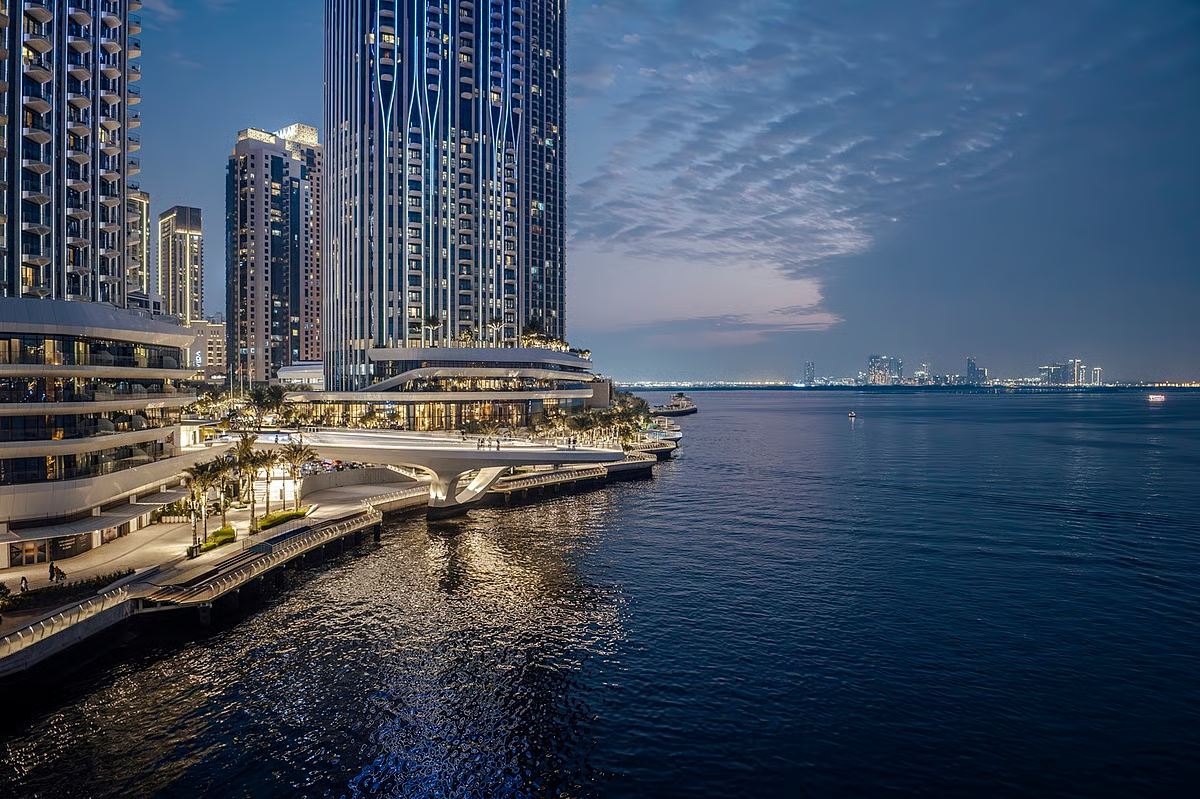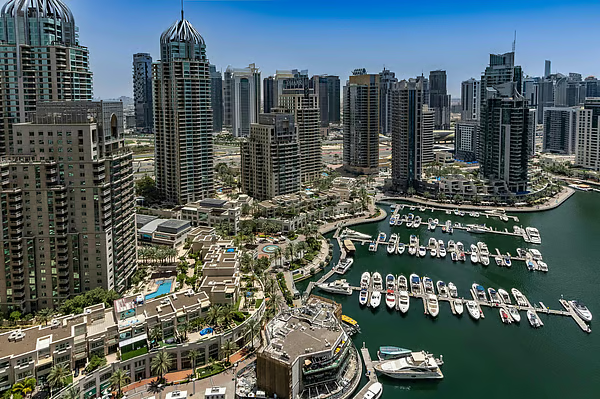
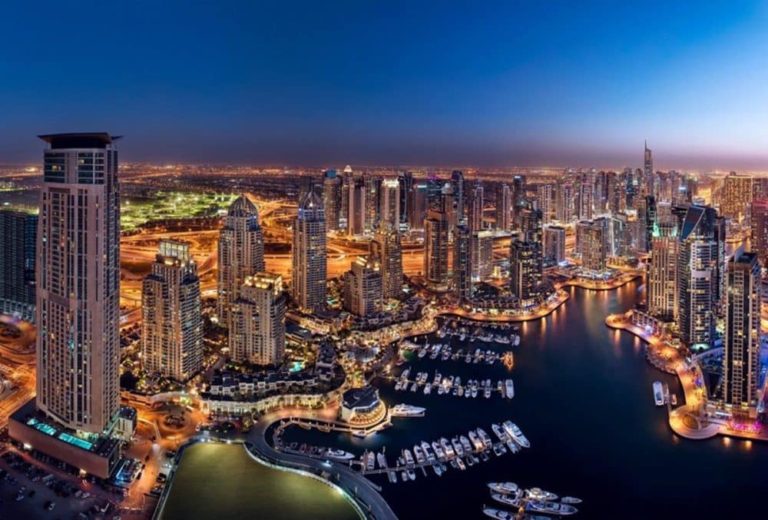
Deloitte Report Forecasts Dubai Real Estate Market Trends for 2025
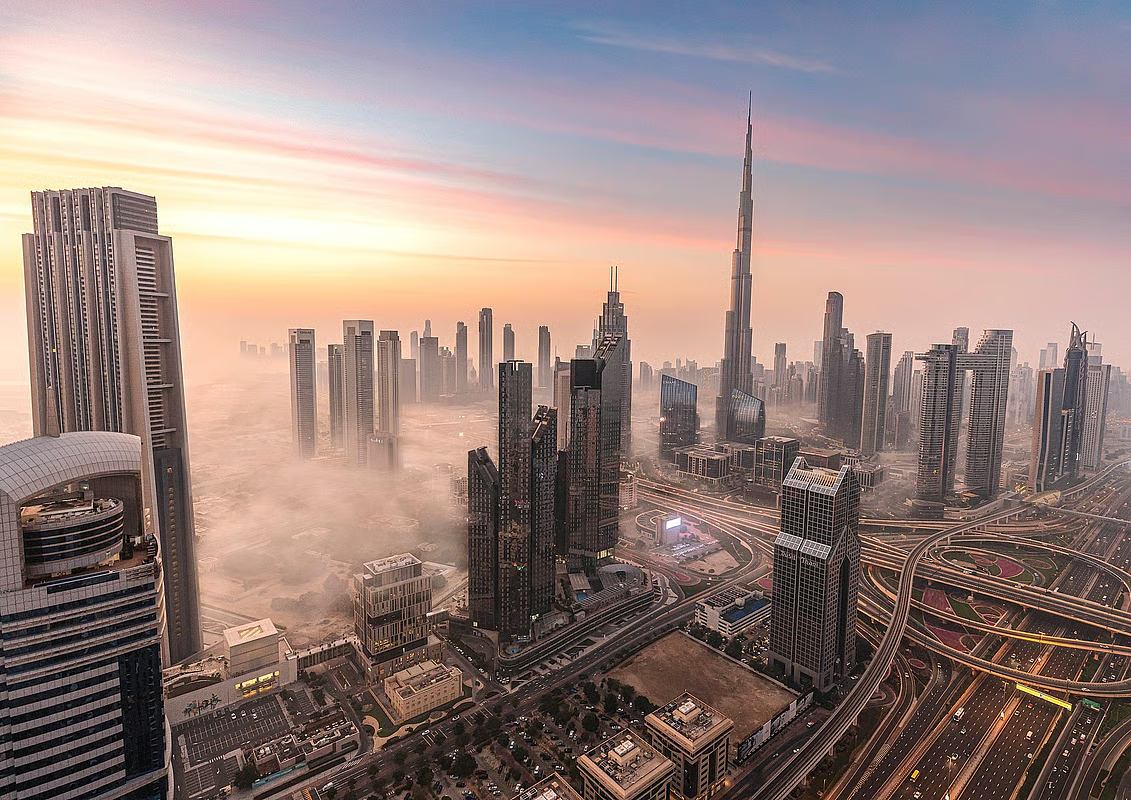
Dubai’s residential real estate market experienced a 20% rise in sales prices and a 19% increase in rental rates in 2024, as outlined in Deloitte’s annual Real Estate Predictions report.
The Emirate remains a secure investment hub, supported by a 5% population growth, record-high residential transactions, and strong economic performance.
Villas outpaced apartments in price appreciation, while rental growth remained steady across all segments.
Dubai Real Estate Outlook
An influx of new supply later in 2025 may help stabilize price hikes but is unlikely to slow overall market momentum.
Despite global economic shifts, Dubai’s office sector remained resilient, with rents rising 17% year-on-year, driven by sustained demand from multinational firms seeking premium office space.
The retail sector remains a major contributor to growth, with total retail spending in Dubai projected to increase by 6% between 2025 and 2027.
Dubai’s hospitality sector reached new heights, with average hotel occupancy climbing to 78% in 2024.
Oliver Morgan, Partner at Deloitte Middle East, highlighted Dubai’s thriving real estate market, attributing its success to strong investor confidence, a diversified economy, and a long-term urban development strategy.
“The market’s strength is driven by robust economic fundamentals, attractive lifestyle offerings, and progressive policies,” he said.
“The continuous influx of expatriates and tourists, combined with large-scale infrastructure projects, cements Dubai’s position as one of the world’s most dynamic real estate markets.”
Residential Real Estate
Dubai’s residential sector maintained its growth trajectory, with average sales prices rising 20% in 2024 to AED 1,597 ($435) per sq ft.
Sales transactions reached unprecedented levels, with 44% occurring in the secondary market.
Demand remains strong for affordable, family-friendly villa communities and townhouses.
Gross rental yields climbed to 6.7%, underscoring sustained demand across both villas and apartments. Rental hikes were most pronounced in Dubailand, Meydan, and International City, with year-on-year increases between 39% and 46%.
The rental market continues to be dominated by cash buyers and existing residents looking for affordable villa and townhouse options.
Hospitality
Dubai’s tourism industry continued its upward trajectory, attracting 18.7 million overnight visitors in 2024, a 9% increase from the previous year.
The average hotel occupancy rate reached 78%, while Revenue Per Available Room (RevPAR) grew by 1%, driven by successful global tourism campaigns and Dubai’s appeal as a luxury and business travel hub.
New hospitality brands and innovative tourism concepts further strengthened Dubai’s position as a leading global tourism destination.
Office Market
Demand for Grade A office space surged in 2024, with premium towers like ICD Brookfield in DIFC maintaining occupancy rates above 95%, reflecting strong interest from multinational corporations.
High demand for prime office space led to a 12% rent increase in 2024.
Despite competition from Abu Dhabi and Riyadh, Dubai’s pro-business environment and economic growth continue to attract corporate expansions and relocations.
Retail
Retail real estate continues to benefit from increasing consumer demand and the growing number of new residents and tourists, with total retail sales projected to grow by 6% between 2025 and 2027.
E-commerce growth is reshaping the retail landscape, with brands adopting hybrid digital and physical store strategies. Dubai’s Urban Master Plan 2040 prioritizes the expansion of community-based retail hubs to enhance accessibility and convenience.
Dubai’s retail initiatives, coupled with its focus on technological advancements and sustainability, are reshaping local shopping experiences.
Industrial and Logistics
Dubai’s industrial real estate market continues its expansion, driven by rising demand from the manufacturing, logistics, and e-commerce sectors.
Among the southern industrial zones, the highest rental rates were recorded in JAFZA, Dubai South, and DIP, with warehouse rents in JAFZA increasing by 28% year-on-year.
The UAE’s import and export trade grew by 8.4% and 6.6%, respectively, in 2024, reinforcing Dubai’s position as a key trade and logistics hub.
2025 Dubai Real Estate Forecast
Dubai’s real estate sector is poised for continued growth, backed by ambitious government initiatives, infrastructure projects, and increasing foreign direct investment.
The residential, commercial, and hospitality sectors are expected to maintain their upward trend, with some market segments stabilizing as new supply enters the market.
As Dubai advances toward its 2040 Urban Master Plan, its emphasis on sustainable development, enhanced transportation infrastructure, and smart city initiatives is expected to further boost its appeal to investors and residents.