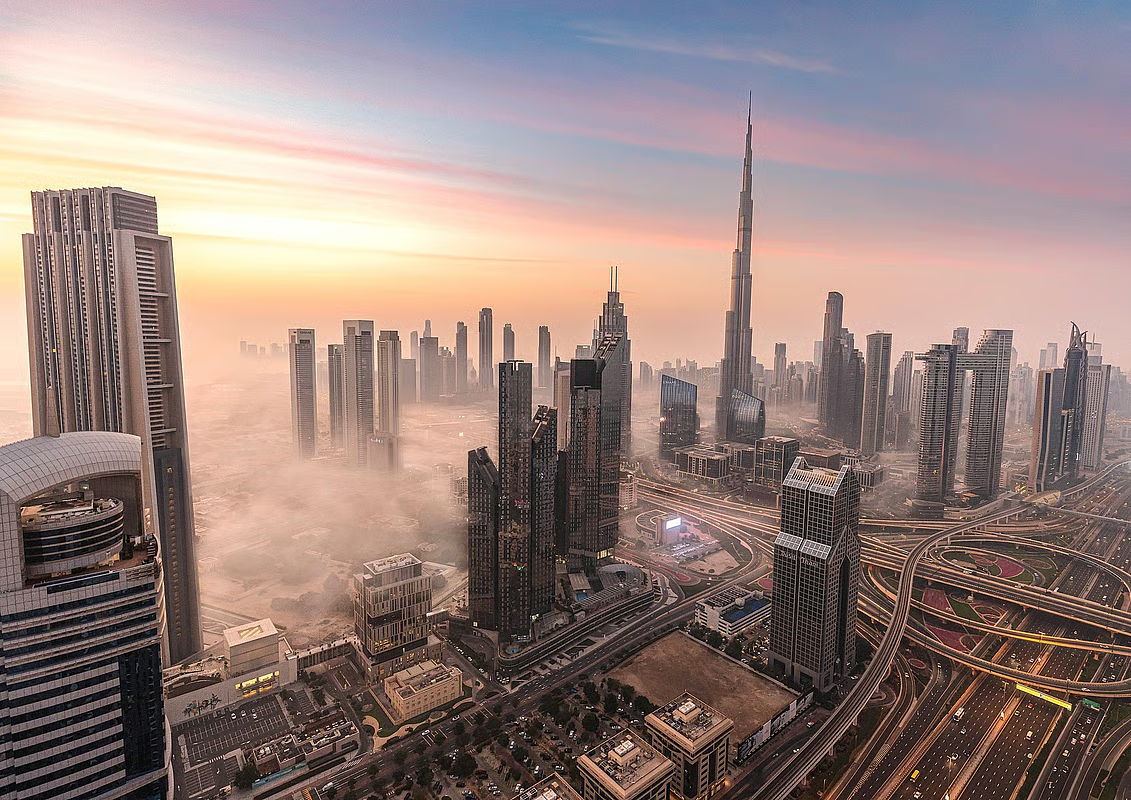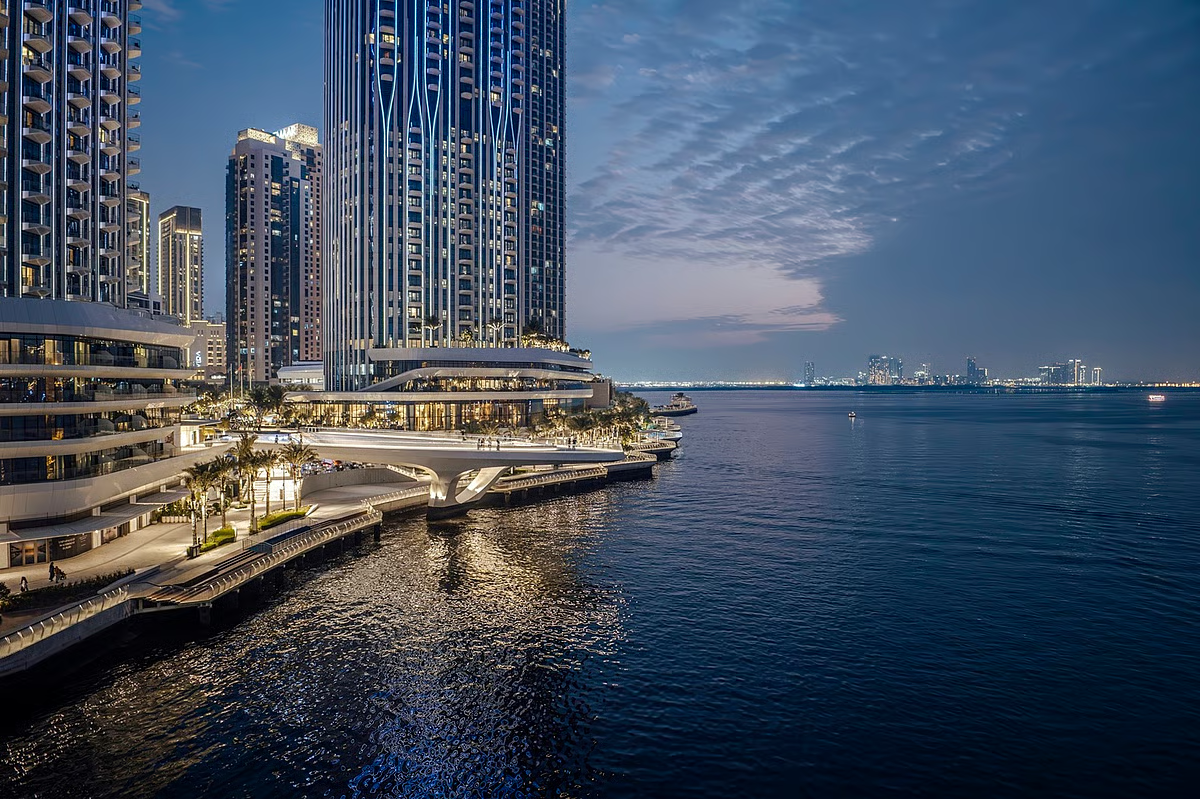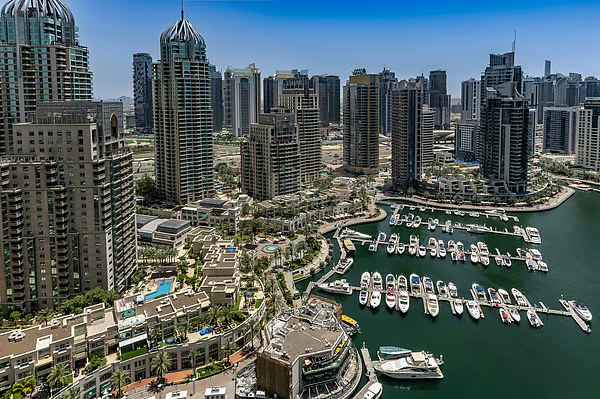
Dubai property developers are focusing on affordable housing to attract young professionals and the rapidly growing middle class amid rising rental prices.
Recent trends in the Dubai real estate sector show a shift towards mixed-use developments that integrate residential, commercial, and leisure spaces, as experts anticipate a moderation in market growth.
Affordable housing has become a central theme as developers aim to reach the increasing middle class and young professionals relocating to Dubai.
The emergence of smart cities, supported by digital infrastructure and artificial intelligence (AI), is also gaining traction, with top real estate firms competing to attract investors by promising improved quality of life.
Several key trends are expected to shape Dubai’s and the UAE’s real estate markets towards the end of 2024 and beyond.
“One notable trend is the shift towards mixed-use developments that blend residential, commercial, and leisure spaces, creating a comprehensive living experience,” said Karun Luthra, Vice President of global operations at Foremen Fiefdom, a leading real estate investment firm based in Dubai.
“Another clear trend is developers increasingly offering properties at affordable price points, particularly in areas on the outskirts of the city, to appeal to middle-income buyers,” he added.
Luthra noted that this is also a strategic response to rising rents in the emirate.
Industry insiders have indicated that many developers are currently reevaluating their business strategies, as some market experts predict a slowdown in growth.
They mentioned that developers are adjusting their upcoming projects to feature properties at accessible prices and are enticing investors to acquire appreciating assets that provide steady returns.
Senior industry officials anticipate a rise in community developments in 2025, which aim to promote a balanced work-life environment and attract higher occupancy rates.
Luthra also highlighted an increasing emphasis on sustainability in real estate, with green building certifications becoming the new norm.
Projects like Dubai Sustainable City reflect this shift, appealing to environmentally conscious investors.
“These sustainable initiatives, combined with a strong governmental push through programs like the UAE Golden Visa, indicate a promising future for Dubai’s real estate market,” he said.
“Furthermore, foreign investment is expected to flourish in the coming years, supported by government initiatives designed to enhance Dubai’s global appeal,” he added.
Despite the current shifts in the industry, experts believe that the luxury real estate sector in Dubai will continue to thrive as more global elites are seeking investments in this segment.
The ongoing high demand for luxury properties is positioning the luxury real estate sector as a key driver of the UAE’s economic growth.
“The construction of high-end residential complexes generates employment, while an influx of affluent residents boosts demand for luxury services, retail, and dining,” said a senior executive at a proptech company.
“Dubai’s reputation as a safe, tax-free haven for the global elite also fosters capital inflow, reinforcing the city’s status as a premier investment destination,” the executive noted.
Luthra stated that attracting wealthy international buyers will significantly impact the emirate’s high-end developments on the national economy.
“As the luxury property market grows, its influence on the UAE’s GDP and broader economy becomes more significant,” he explained.
The Foremen Fiefdom senior executive mentioned that to maintain positive market sentiments, property prices in Dubai are expected to rise steadily by 5 to 7 percent annually this year and in 2025 due to sustained demand.
“Market insights indicate that the UAE’s real estate market is on track to reach $680 billion by year-end, with the residential sector alone representing $390 billion.
“This growth reinforces the country’s economic strength and global investment appeal,” he added.
The UAE Central Bank predicts a 6.2 percent increase in GDP (gross domestic product) in the coming year, driven by the real estate market, particularly the luxury property segment’s contribution to the nation’s economic growth.