
Privately, developers, investors, and brokers are inquiring about the potential speed at which the market might undergo a turnaround.
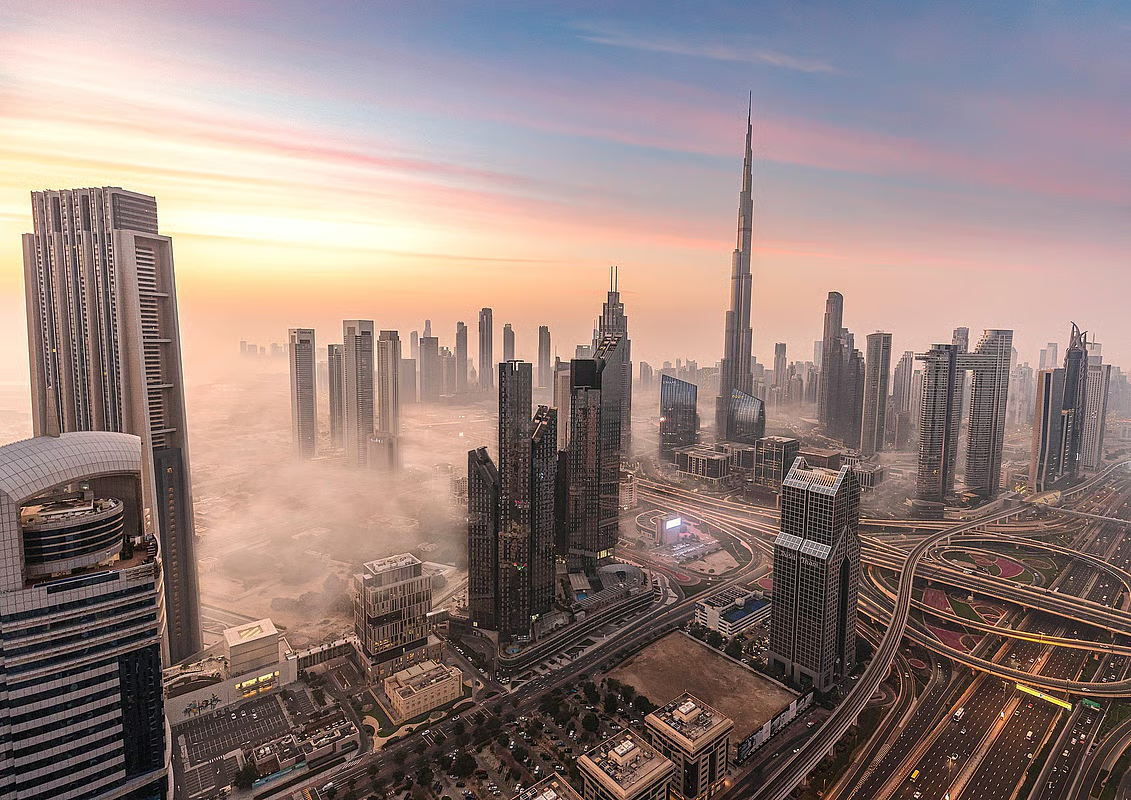
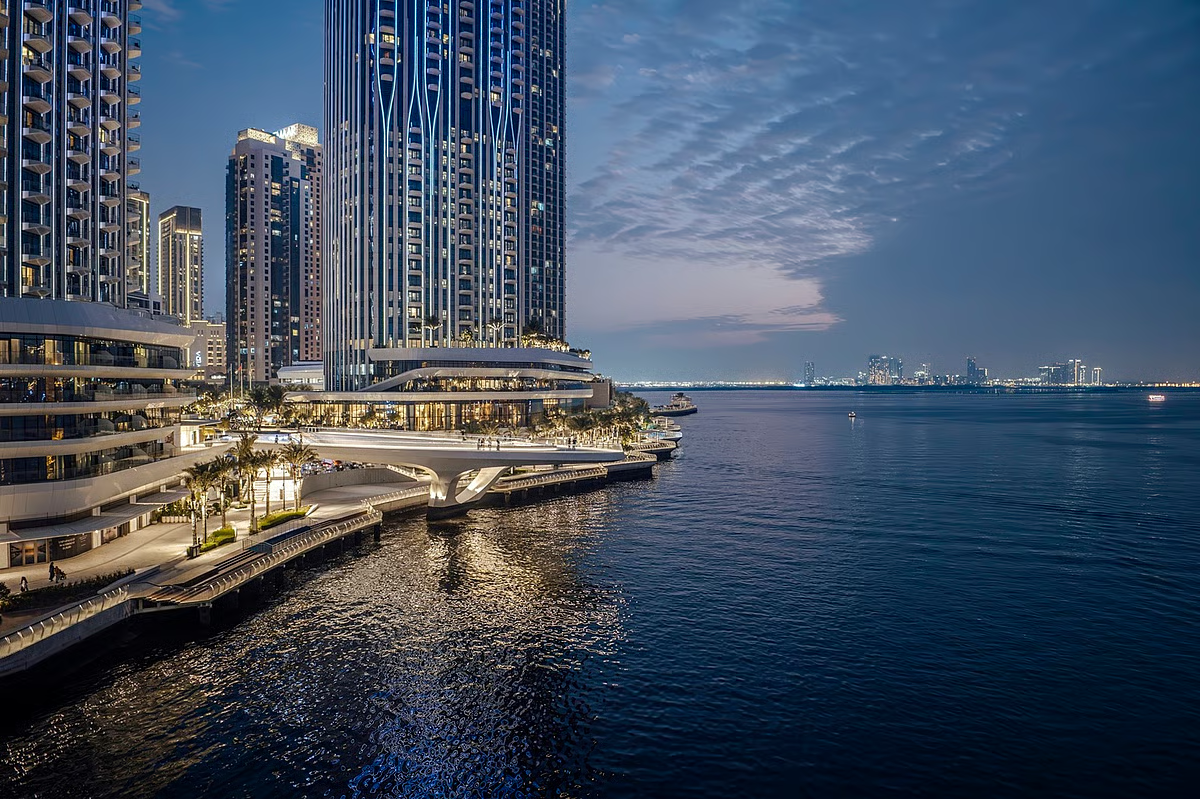
Dubai’s property market, once soaring with cranes dotting the skyline and luxury homes changing hands at record prices, is displaying signs of a potential slowdown. Developers and investors are cautiously assessing the risk of a correction reminiscent of the 2008 slump. While Dubai has embarked on an economic rejuvenation, including the ambitious 10-year plan D33, its vulnerability lies in its reliance on foreign capital, particularly from China and Russia. The real estate sector, constituting 8.9% of the economy, is a crucial gauge of Dubai’s economic health. Despite a tapering of Russian and Chinese investments, increased interest from Indian buyers may mitigate the impact of a potential downturn, according to experts. The city’s role as both a safe haven and a haven for the ultra-rich is underscored by a diverse array of investors from India, the UK, Egypt, Lebanon, Pakistan, and Turkey.
Cooling prices
In 2023, a record-breaking 431 homes in Dubai were sold for over US$10 million, almost double the previous year’s figure, establishing the city as the world’s largest market for such high-value transactions, as per research by property agency Knight Frank shared with Reuters.
While house prices in Dubai’s prime residential areas—Palm Jumeirah, Emirates Hills, and Jumeirah Bay Island—are projected to grow at a more moderate rate of 5% in 2024, following a substantial 15.9% increase in the year to September 2023, Knight Frank reports.
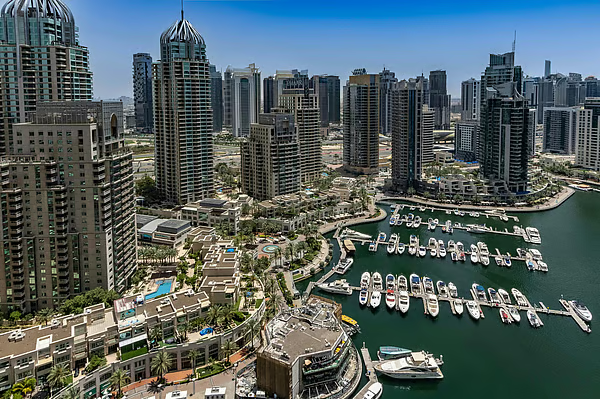
In contrast, house prices outside these luxury zones surged by 19% in the year to September and are anticipated to continue growing, albeit at a more restrained pace of 3.5% in 2024.
Former finance chief of Dubai, Nasser al-Shaikh, expressed concern about the global economy’s condition, emphasizing Dubai’s susceptibility to external influences. However, he remains optimistic that as long as both national and local governments fulfill broader development plans, the housing supply can be absorbed by new residents.
A senior source at a major Dubai developer expressed a less optimistic outlook, suggesting that house prices could decline by 10-15% over the next few years.
Additionally, another source closely familiar with the situation revealed that at least one prominent local landlord is actively seeking to divest multiple hotel properties, including one located in the luxury hotspot Palm Jumeirah, as a strategy to reduce risk in their portfolio.
Mireille Azzam, JLL’s head of strategic consulting for the Middle East and Africa, conveyed a similar sentiment, stating that there is an expected oversupply relative to demand in the next two to three years, particularly in the luxury segments, leading to a natural slowdown. Azzam added that some residents are adopting a wait-and-see approach, anticipating more affordable prices before making a move.
New-found resilience?
Memories of Dubai’s 2008 property crash, which led to a US$20 billion bailout by Abu Dhabi, still cast a shadow, but analysts assert that lessons have been assimilated, and the risk of contagion from any downturn appears diminished.
According to Kroll’s Abdeljaouad, financial institutions and major developers in the region have learned from past crises and are well-prepared, with a shifting market focus towards mainstream housing and infrastructure.
Economic indicators remain robust, as evidenced by an S&P Global December purchasing manager survey reporting its highest reading in 16 months, reflecting Dubai’s non-oil businesses in expansion mode.
Forecasting just 13,000 homes annually over the next six years, well below the 30,000 run-rate over the last 15 years, Dubai suggests a potential demand underpinning due to a housing shortfall, according to Knight Frank’s Faisal Durrani.
The exposure of the 10 largest UAE banks to real estate, which stood at over 30% during the 2008-9 financial crisis, has decreased for nine consecutive quarters, reaching 16.2% in Q3 2023, down from 22.3% at the end of 2020, as reported by Alvarez & Marsal.
While banks and developers have mitigated risks, caution is raised about thousands of other industry players being more vulnerable to an extended slowdown. This includes Dubai’s brokerages, numbering around 4,000 compared to 1,200 in 2020, as highlighted by Betterhomes CEO Richard Waind.
Potential threats to Dubai’s real estate sector include unexpected spikes in inflation, unpredictable global interest rate policies, and regional contagion from the Israel-Hamas war, as cited by eight sources. The impact of potential disruption to key shipping routes in the Red Sea remains unclear. However, geopolitical turmoil, such as Russia’s invasion of Ukraine, has benefited Dubai in recent years, with speculation that this trend could persist, according to a developer source.