
Transaction volumes surged by a notable 35% quarter-on-quarter, soaring to a record-breaking 35,100 units.
- In Q1, 63% of transactions involved properties under construction.
- There was a remarkable 73% increase in off-plan sales compared to the previous quarter.
- The market was predominantly driven by apartment sales, which accounted for 83% of all transactions.
Rental rates across Dubai witnessed an average rise of 7% citywide.
The Dubai real estate market experienced significant growth during the first quarter of 2024, attributed to factors such as the expanding expatriate community, policy adjustments regarding the Golden Visa for real estate investors, and robust performance in non-oil industries. The Dubai Residential Market – Q1 2024 report by global real estate services provider Savills unveiled this unprecedented growth.
Andrew Cummings, Head of Residential Agency at Savills Middle East, remarked, “Dubai’s residential real estate market has maintained an upward trajectory, bolstered by population expansion, economic resilience, strong business sentiment, and a flourishing tourism and hospitality sector.”

Off-plan sales witness a surge
Off-plan sales saw an impressive surge of 73% compared to the previous quarter, constituting 63% of total transactions in Q1 2024. This increased interest can be attributed to strong demand for top-notch assets from reputable developers, alongside appealing incentives offered to buyers during project launches.
Market activity has shifted towards Dubai’s Southeast submarkets
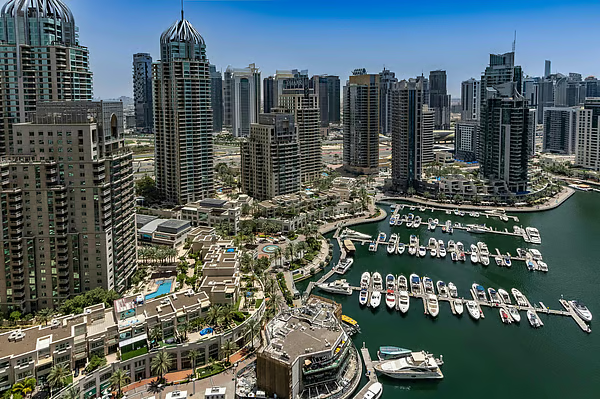
with a particular focus on micro-markets like Jumeirah Village Circle (JVC), Arjan, Dubai Hills Estate, Meydan One, and Damac Hills 2. Demand remains robust in other areas such as Business Bay, Downtown Dubai, Dubai Marina, and Jumeirah Lake Towers (JLT).
Apartments continue to dominate the real estate landscape
making up 83% of all transactions, with primary sales constituting 63% of the demand. Meanwhile, villa transactions have also surged, with notable locations including Damac Lagoons, Damac Hills 2, The Valley, and Tilal al Ghaf.
“In Q1 2024, around 5,000 units entered the market. Notable launches included Mercedes-Benz Places, Claydon House by Ellington, Franck Muller Aeternitas Tower in Dubai Marina, and Vida Dubai Hills by Emaar. Apartments comprised 84% of these launches, indicating confidence in this market segment moving forward,” remarked Alec James Smith, Director of Sales and Leasing at Savills Middle East.

More than a thousand transactions exceeded AED10 million
Demand for affordable options reflects a practical approach by buyers, although high-end luxury properties continue to attract attention. The first quarter of 2024 witnessed over 1,000 transactions exceeding AED 10 million, marking a 41% year-on-year increase. Furthermore, transactions involving apartments priced at AED 10 million or more surged by 51% compared to the previous quarter. Palm Jumeirah, Business Bay, and Bluewaters Island top the list of upscale locations with the highest per square foot rates for apartments, while Dubai Hills, Palm Deira, District One, and Tilal Al Ghaf lead in villa transactions.
Capital values
Dubai’s real estate market has sustained an upward trajectory in capital value growth, with an impressive 17.4% increase in 2023, according to the Savills World Cities Prime Residential Index. On average, property values for apartments increased by 20% year-on-year, and for villas and townhouses by 21%. However, certain established locations and segments command a premium due to superior accessibility, quality, and amenities.
Rental rates in Dubai saw an average quarterly increase of 7% citywide, with apartments experiencing an 8% rise and villas growing by 6%.
Cumming concluded, “The recently revised rental index may result in higher rents in specific areas, potentially ranging from 10% to 20%. Consequently, tenants may contemplate relocation, downsizing, or exploring property ownership. Dubai’s residential real estate market is anticipated to perform strongly in the near future, given the upward trends in both rentals and capital value appreciation.”