
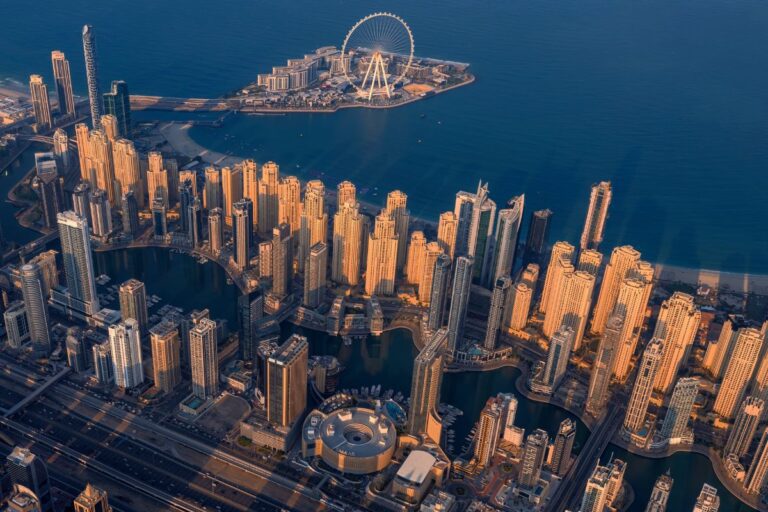
Dubai’s real estate sector is witnessing notable expansion, rendering it an appealing choice for buyers. However, conducting a thorough financial evaluation and weighing associated expenses is imperative prior to any purchase decision.
With its recent removal from the FATF Grey List, tax-free incentives, and the potential for significant returns, Dubai’s real estate market has become a magnet for global buyers.
In Q1 2024, Dubai broke records with over 34,000 transactions, a 20 percent surge compared to the same period in 2023, making it the most active quarter for the emirate’s property sector.
The question remains: Should I invest in property? Experts generally advise yes, emphasizing the importance of first building savings, according to Arabian Business. If considering a property worth AED1 million, here’s what you need to know.
First things first, are you financially ready to be a homeowner in Dubai?

Stuart Porter FPFS, Wealth Coach and Chartered Financial Planner, emphasized the importance of a secure job, stable income, manageable debt levels, and adequate savings for a down payment and emergency fund when considering buying a home. He advised considering the duration of residence, as significant costs are involved in property purchase, and early mortgage payments mostly cover interest. Therefore, renting might be more economical for short-term stays.
Porter noted that higher personal contributions to property purchases reduce the need for borrowing. A substantial down payment expands lender options and often secures favorable interest rates, resulting in lower monthly repayments. The minimum deposit, regulated by the UAE Central Bank, hinges on the borrower’s “status” and property value.
“Expatriates purchasing a property valued under AED5 million may access up to 85 percent financing, though availability and rates vary among lenders,” he noted.
Property buyers need to account for additional expenses beyond the down payment, including:
– Mortgage application fee (usually 1 percent of the loan amount)
– Mortgage broker fee
– Land department fee (totaling 4 percent of property value)
– Estate agent fee (totaling 2 percent of property value)
– Registration fee for new buildings
– Utilities deposit and connection
– Home insurance (for building and contents), life insurance to cover loan repayment in case of death, moving expenses
– Community and service fees, and a valid will to manage property distribution after death
“Buyers should allocate an additional 10 percent of the property value to cover these incidental expenses,” he advised.
Arabian Business was informed by UAE-based financial advisor Mike Coady that expatriates aiming to purchase property worth AED1 million typically require a 25 percent down payment.
Coady advised, “For those anticipating a property acquisition soon, it’s wise to maintain savings in a high-interest savings account, offering returns above inflation with instant access. Long-term investors should explore alternative assets like equities and ETFs for potentially higher returns. Saving for a deposit demands setting clear goals and calculating monthly savings needed. A proficient financial advisor can assist in considering factors like currency, growth rates, inflation, and property price fluctuations.”
He emphasized the importance of assessing long-term income stability and future expenses, advocating for a comprehensive approach to financial planning, covering retirement, education expenses, and major life events.
Coady stressed the integration of property ownership into overall financial strategies, highlighting the significance of understanding one’s potential time horizon in the UAE.
What are the advantages of owning property in Dubai?

Coady highlighted numerous financial benefits of owning property in Dubai, including potential capital appreciation, high rental yields, and the absence of property taxes, which significantly enhance the investment appeal. He emphasized the importance of being aware of service charges for community developments.
Porter emphasized the stability in housing costs compared to renting and the tangible asset property ownership provides. He stressed the need for buyers to thoroughly assess their current finances before making a decision.
Buyers should review their credit score and monthly income versus surplus, ensuring they have enough for down payment, closing costs, and an emergency fund without compromising financial stability. Lifestyle considerations also significantly influence property success, including whether it’s for personal use or rental, local amenities, transportation, and proximity to work.
Budgeting costs for buying Dubai property

Homebuyers should strive to save a minimum of 25 percent of the property’s value for the down payment, according to him.
“When it comes to mortgage payments, the 28/36 rule is commonly used, where housing expenses should not exceed 28 percent of gross monthly income and total debt servicing should not surpass 36 percent,” he explained. Besides mortgage payments, it’s crucial to allocate funds for yearly maintenance, potential repairs, community fees, and insurance.
“A general guideline is to allocate 1 to 2 percent of the property’s value annually for maintenance and unexpected repairs.”
Porter emphasized that mortgage and rent payments constitute “the largest expenditure” in the family budget. “As a significant fixed cost, it’s essential to minimize it since it’s necessary for shelter,” he stated, advising that no more than 30 percent of the buyer’s monthly income should be dedicated to mortgage payments, including principal, interest, and insurance (life and home).
Porter further elaborated that effective budgeting and financial management for homeownership necessitate creating a comprehensive budget covering mortgage payments, property community fees, insurance, maintenance costs, and utilities. He stressed the importance of prioritizing savings for emergencies and ongoing home maintenance while considering long-term financial goals.
Challenges of owning property in Dubai

Coady highlighted that risks for investors encompass property value fluctuations, alterations in rental yields, and potential tenant vacancies. To mitigate these, opt for properties in desirable and emerging locales, grasp market dynamics, and maintain financial reserves for unforeseen downturns. Additionally, timing the market is crucial, as understanding market cycles can be advantageous. Consider broader economic indicators like interest rates and economic growth, which impact property values. Moreover, factor in maintenance expenses and upkeep of communal areas, as neglecting these may diminish property worth.
Are there any alternatives other than buying property in Dubai?

Coady suggested exploring various investment options such as real estate in different countries, REITs, stock market funds, or starting a business, each carrying its own risk and time horizon considerations tailored to your financial goals and risk tolerance.
Porter identified four primary asset classes, including cash, fixed income securities, property, and equities, as alternatives. He emphasized the importance of a balanced portfolio with exposure to each of these asset types, each offering unique advantages and disadvantages.
For instance, while property presents potential for capital growth, its illiquidity may pose challenges if immediate cash is required. Residential real estate represents only a fraction of the broader property sector, encompassing diverse assets like factories, warehouses, and offices. Investing in these assets individually may be beyond the means of most investors, but diversification can be achieved through collective investment schemes like ETFs and REITs.