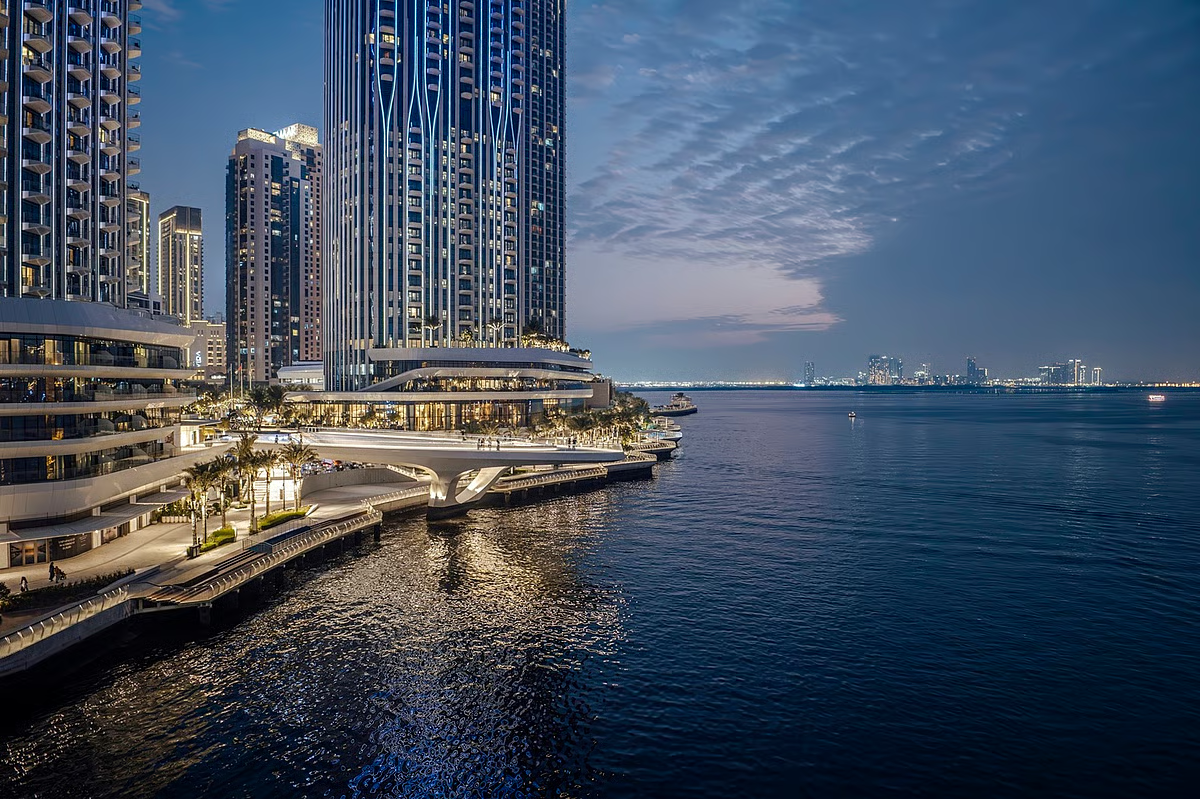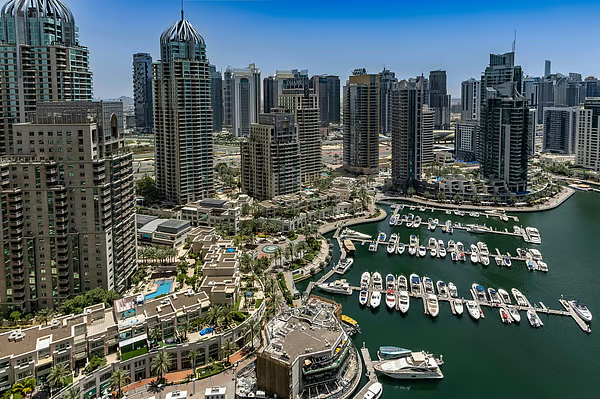

In 2023, there was notable growth in property transactions in Dubai’s residential sector, encompassing both primary and secondary markets.
JLL’s A Year in Review UAE report states that despite global economic challenges, the real estate sector in the UAE exhibited resilience, experiencing substantial growth across major asset classes in 2023. Research Director Faraz Ahmed emphasized the industry’s robust performance, specifically in the office and residential sectors, attributing it to heightened stock and demand. He also noted that, with the government’s emphasis on economic strengthening and diversification, real estate will remain a crucial driver due to sustained demand and a favorable investment climate in the country.
Substantial property transactions are observed in the residential real estate of the UAE
In 2023, the residential sector in Dubai experienced significant transaction growth, with a 51 percent year-on-year increase in value and a 43 percent year-on-year increase in volume. Abu Dhabi saw a notable surge in total transaction values, up by 102 percent annually, and a 77 percent year-on-year increase in volume, driven by successful launches in the off-plan segment.
During Q4 2023, Dubai’s average villa sale prices hit a new record high, surpassing the 2014 peak by 15 percent. The year witnessed the delivery of over 36,000 units in Dubai, bringing the total stock to over 719,000 units. In Abu Dhabi, the completion of over 5,000 units increased the total completed stock to over 284,000 units.
Looking ahead to 2024, around 34,000 units are slated for delivery in Dubai, while Abu Dhabi is expected to see the completion of approximately 8,000 units.

The UAE experiences an increase in demand for office spaces
In 2024, a surge in demand for quality office space led to the development of new projects in the office sector. Commercial real estate developers capitalized on this increased demand, with certain free zones in the UAE either expanding their jurisdiction or launching new projects.
In Dubai, the total stock of office space reached 9.2 million sqm after the delivery of around 92,000 sqm of gross leasable area (GLA) in 2023. Additionally, there are plans to add 44,000 sqm of new office space in the current year. In Abu Dhabi, an estimated 112,000 sqm of new office space is anticipated to be introduced in 2024.
The retail industry experiences growth in both Dubai and Abu Dhabi
The retail sector in Dubai witnessed significant transactional growth in both primary and secondary markets in 2023. Additionally, mall operators adopted a more dynamic management strategy, concentrating on enhancing customer experiences through experiential retail concepts and food and beverage offerings.
During the same year, Dubai saw an increase of approximately 123,000 sqm. in retail space, bringing the total stock to 4.8 million sqm. In parallel, Abu Dhabi experienced the addition of around 250,000 sqm. of retail GLA, raising the total stock to 3.15 million sqm.
Looking ahead to 2024, Dubai is expected to introduce an extra 160,000 sqm. of retail space, while Abu Dhabi is anticipated to contribute around 19,000 sqm. of new retail GLA.
The hospitality sector continues to sustain a positive momentum
In 2023, Dubai’s total key count rose to 153,000, adding 5,000 keys, while Abu Dhabi exceeded 32,500 keys, including a 200-key addition. Dubai anticipates 7,000 more keys, and Abu Dhabi foresees a 700-key increase. Dubai’s city-wide occupancy hit 77%, and Abu Dhabi maintained a robust 72% in November 2023.
Despite a dip in average daily rates (ADR) in Dubai, increased tourist arrivals sustained a healthy revenue per available room (RevPAR) at $138. Abu Dhabi experienced a 20% ADR rise to $143, contributing to a significant 25% annual increase in RevPAR to $103.
The positive trend in the UAE’s real estate sector is expected to persist in 2024, driven by factors like demand, government initiatives, and ongoing industry development.