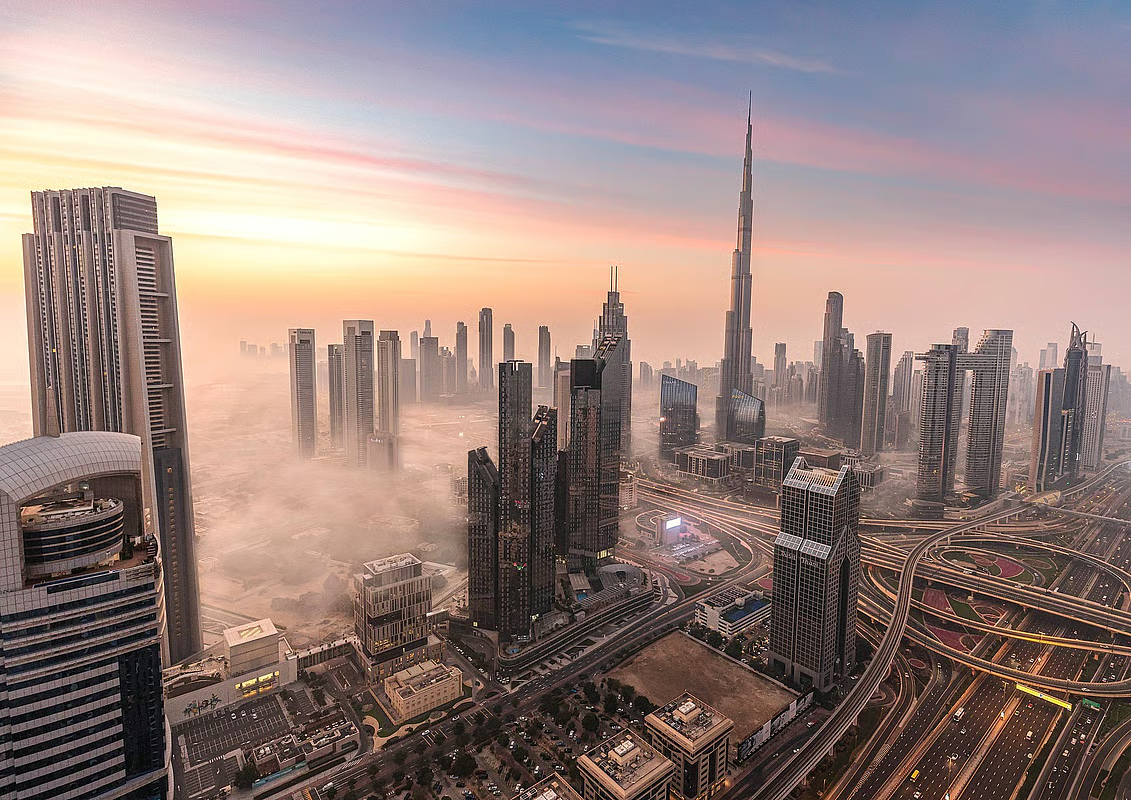
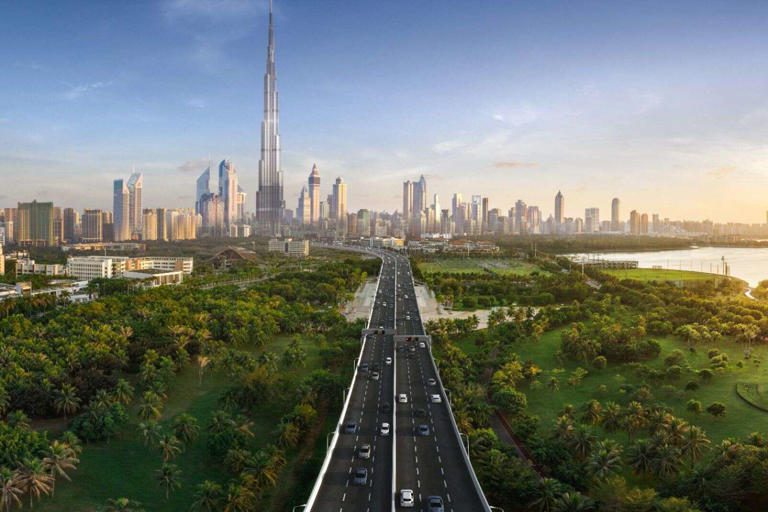
Dubai’s approach to remote work is reshaping its real estate market, driving demand from central districts to suburban and community-focused developments to counter high rents and traffic.
Many residents, including freelancers, are moving to Dubai’s suburbs to take advantage of work-from-home policies and reduce rental costs.
This shift allows tenants to save up to Dh100,000 annually in rentals by relocating to suburban areas, while also avoiding time lost in traffic congestion.
As Dubai’s population has reached record highs post-pandemic, traffic has significantly increased, with some residents spending hours commuting daily.
A study by the Roads and Transport Authority (RTA) highlighted that remote work and flexible hours could ease peak morning travel times across Dubai, reduce traffic, and encourage suburban living.
With remote work becoming more common, residents are increasingly drawn to areas beyond central business hubs. Suburbs like Dubai South and villa communities near Al Qudra offer larger homes, competitive prices, and essential amenities. In October 2024, Dubai’s real estate market reported Dh54.6 billion in transactions across 23,791 deals, reflecting strong demand. This aligns with the suburban trend fueled by flexible work opportunities.
The shift to suburban areas such as Dubai South and communities along Sheikh Mohammed bin Zayed Road and Emirates Road is also linked to the ongoing relocation of operations from Dubai International Airport to Al Maktoum International Airport. This has prompted developers to launch master-planned communities in these regions.
“With rental pressures rising, suburban living is becoming a popular choice, offering excellent value and quality environments,” said Ayman Youssef, Managing Director of Coldwell Banker.
Freelance professional Hanae Ouakrime, who moved to Ras Al Khaimah a year ago to escape high rents in Dubai and Sharjah, noted the additional benefits of reduced commute times.
“I mostly work from home and visit Dubai once or twice weekly. It’s just an hour’s drive if I leave early. Relocating to RAK has given me more space for myself and my two pets while avoiding traffic jams,” said Ouakrime.
Youssef pointed out that relocating from Downtown can cut annual rental costs by up to 50%.
“For instance, a 3-bedroom townhouse in Maple rents for Dh260,000, while a similar unit in The Valley costs Dh140,000. Similarly, a 2-bedroom apartment rents for Dh200,000 in Downtown compared to Dh100,000 in Town Square,” he said.
Consistently rising rents over the past three years have made affordability challenging for some tenants, pushing them to explore remote areas.
“High rents are a challenge, but suburban communities offer good amenities and quality lifestyles, making them appealing alternatives,” Youssef added.
Farooq Syed, CEO of Springfield Properties, said RTA data highlights a pivotal shift in how Dubai residents choose to live.
“With the government supporting remote work, commuting becomes less necessary, and residents prioritize spacious homes in communities that accommodate their work-from-home lifestyle. This will reshape Dubai’s property market and redefine buyer priorities,” he said.
Today’s homebuyers seek more than just a residence—they want properties that balance work and life. Features like dedicated office spaces, green areas, and recreational facilities are now key. In Damac Hills 2, average sales prices rose by 29% year-on-year, reflecting demand for affordable suburban housing that supports remote work.
Developers such as Emaar, Damac, and Sobha are adapting by offering flexible layouts and community-oriented designs that meet the needs of remote workers.
Developers are also investing in community-focused projects that integrate residential, retail, and leisure spaces. Examples include Town Square by Nshama, Dubai Hills Estate, Arabian Ranches 3, and The Valley, offering residents a self-sufficient lifestyle with access to shopping, dining, and recreation.
“Developers are creating communities that provide all necessary amenities nearby, reflecting a broader shift in Dubai’s real estate market toward convenience and high-quality living,” said Farooq Syed.
In recent years, Dubai has seen numerous new projects launched by local and international developers to meet demand from tenants transitioning to ownership and foreign investors buying properties at comparatively lower prices than in other global cities.
New developments like Emaar’s Greenville in Emaar South and Avena in The Valley are designed for remote workers and families, emphasizing amenities tailored to the evolving needs of Dubai residents.
As suburban areas attract more residents, infrastructure development becomes critical to sustaining this growth. RTA findings suggest that remote work could reduce traffic on Sheikh Zayed Road by 9.8% and Al Khail Road by 8.4%. Investment in infrastructure, including schools, healthcare, and transportation, is crucial to maintaining suburban appeal.
With Dubai’s population projected to reach 7.8 million by 2040, expanding infrastructure is essential to support a growing resident base, particularly in suburban regions.
The trend toward remote work is expected to have long-term effects on Dubai’s real estate landscape.
“As demand for suburban living rises, Dubai is likely to evolve a balanced housing market, with both suburban and urban areas catering to diverse resident needs. This supports Dubai’s vision of sustainable, adaptable urban growth,” Farooq Syed concluded.