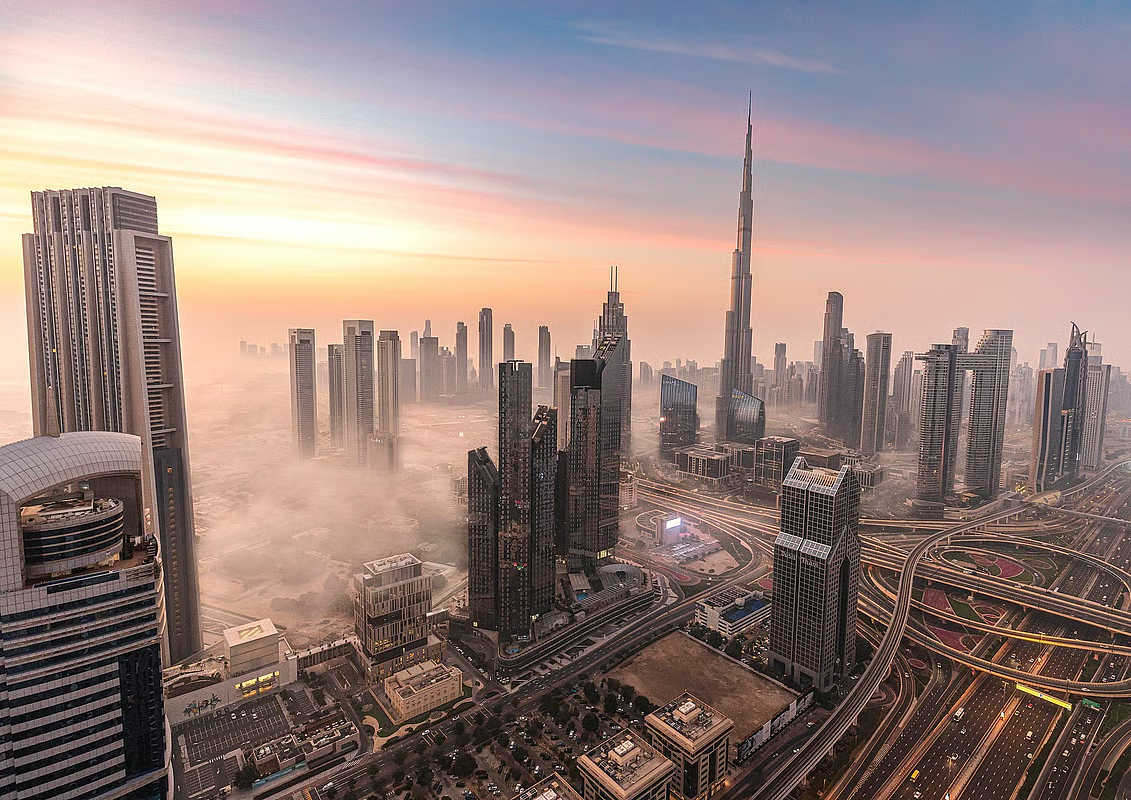
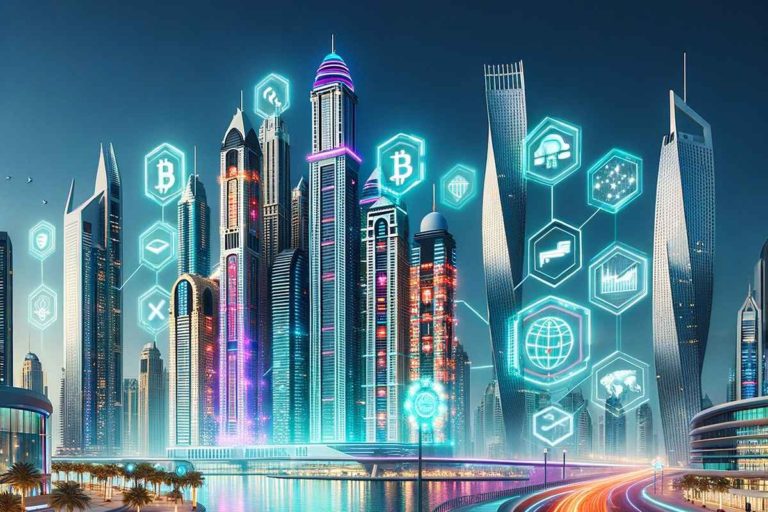
The rise of tokenisation and blockchain technology in Dubai and the larger UAE is enhancing fractional ownership of real estate assets, including high-value properties like vacation homes.
Tokenisation is becoming a key trend in Dubai’s real estate sector, attracting investors to acquire properties through stablecoins and tokens on blockchains, with expected returns of over 8 percent, according to industry experts.
This trend boosts fractional ownership by creating digital assets backed by real-world assets (RWAs) such as real estate on a blockchain. It allows for the sale and purchase of smaller, tradable tokens, enabling investors to earn yields through these tokens and stablecoins.
Industry insiders report that this trend is rapidly growing in Dubai, with Boston Consulting Group forecasting global real estate tokenisation to rise to $16 trillion by 2030, up from $2.7 billion in 2022.
“One of the most significant benefits of real estate tokenisation is its ability to democratize investment opportunities,” said Rachit Pant, Chief Operations Officer at Foremen Fiefdom, a leading Dubai-based real estate services firm, in an interview with Arabian Business.
“By lowering the barriers to entry, tokenisation allows a broader range of investors, including those with limited capital, to participate in the real estate market,” Pant explained.
Tokenised real estate offers properties or their cash flows as blockchain tokens, increasing liquidity, streamlining processes, and enabling digital ownership.
Pant highlighted that tokenisation’s global inclusivity allows investors from around the world to invest in properties in various regions, thus diversifying their portfolios.
Dubai is seeing new players entering the market to leverage these emerging opportunities. Mantra, a Hong Kong-based RWA tokenisation protocol focused on the Middle East, has recently partnered with UAE developer MAG to tokenise $500 million of its real estate portfolio, starting with Keturah Reserve in Meydan.
This partnership will use Mantra’s Layer 1 blockchain to create a real estate financing vault and package a $75 million mansion at The Ritz-Carlton Residences at Dubai Creekside, part of the Keturah Resort. Investors will earn yields through stablecoins and Mantra’s OM token, with an expected return of 8 percent from the stablecoins and additional OM tokens.
Some industry players note that while tokenisation is gaining traction among crypto firms, its adoption in traditional industries remains in the early stages.
The rise of tokenisation is significantly boosting fractional ownership in real estate. This model allows investors to own a share of a property—whether an apartment, villa, or commercial asset—typically managed through legal entities like Limited Liability Companies (LLCs). This setup provides shared usage rights and costs proportional to ownership, offering access to luxury assets at a lower cost.
“Resale and exit strategies are key to fractional ownership. Blockchain technology addresses these challenges by providing secure and transparent transaction methods, particularly in digital assets and real estate,” said the Foremen Fiefdom COO.
“Blockchain can enhance fractional ownership by ensuring clear ownership records, reducing fraud, and simplifying the transfer of ownership shares,” Pant added.
As this technology becomes more integrated, fractional ownership is expected to grow further, offering more diverse and accessible investment opportunities across various asset classes.